Showing posts with label Creation. Show all posts

30 January 2022

Homily for Epiphany 4 - 2022

Authority to Calm and Restore 

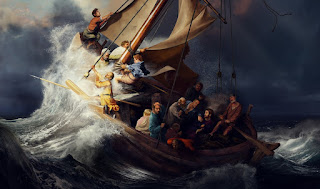
Matthew 8:23-27
 

When Jesus reveals Himself to be the Son of God in human flesh, He also reveals our frailty and our fears.  It’s something like opening the curtains or blinds on the window to let in the bright sunshine. Not only does it brighten up the room; it also reveals all that dust on the furniture. Remember how we prayed in today’s collect. God knows “we live in the midst of so many dangers.” We admitted that “in our frailty we cannot stand upright.” So we pleaded with our Epiphany Lord to “grant strength and protection.” Only with His strength and protection can we find “support in all our dangers.” Only He can “carry us through all temptations.”

Matthew, chapter 8, introduces us to the authority of Jesus and how people react to that authority. Last week, we heard how He had the authority and will to cleanse the leper. That was followed by healing the centurion’s servant simply by speaking His powerful word (Mt. 8:1-13). Then He authoritatively healed Peter’s mother-in-law, helped many who were oppressed by demons, and healed other illnesses. He fulfilled the prophecy that said, “He took our illnesses and bore our diseases” (Mt. 8:17; Is. 53:4).

Then came a scribe. He wanted to follow Jesus wherever He would go. Jesus had to warn him: unlike foxes and birds of the air, “the Son of Man has nowhere to lay His head” (Mt. 8:20). The scribe could not conceive that Jesus was not about self-promotion or His own comfort. Nor could the scribe comprehend that following Jesus means surrendering all guarantees of a comfortable, secure existence in this fallen world. He missed it on the purpose of Jesus’ authority. That authority will lead Jesus to sacrifice Himself upon a cross. Those who follow Him may expect the same cross-shaped life of self-sacrifice.

Then came another of Jesus’ disciples. “First, let me bury my father,” he instructed Jesus. Sounds reasonable. But who knows how long until that would happen? This guy was putting family obligations above allegiance to Jesus. He missed it on the priority of Jesus’ authority. So Jesus gave a stern command: “Follow me, and leave the dead to bury their own dead” (Mt. 8:22). Translation: Jesus calls those who follow Him to make their allegiance to Him the first and top priority. “Whoever loves father or mother more than me is not worthy of me” (Mt. 10:37), He would also say.

Now we come to today’s Gospel. It answers the question: what is the extent of Jesus’ authority? Jesus reveals He has authority even over storm and sea—in fact, over all creation. He also reveals the frailty and fear of His followers, yes, including you and me.

They’re all in the boat. A great storm arose. Great waves swamping the boat. Literally, the boat was hidden or covered by the waves. How did the disciples react? Remember, some of them were fishermen on this very lake called the Sea of Galilee. You’d think they would know the waters, the weather patterns, and how to handle the waves. Their reaction this time? “Save us, Lord; we are perishing.” In Mark’s account of the same event, the disciples cry out, “Teacher, [don’t you] care that we are perishing?” (Mk. 4:38).

It’s what happens when you’re not so sure about the extent of Jesus’ authority. You conclude Jesus doesn’t care. You fear He’s not always there for you. You wonder if you will even survive. It could be a wind storm on a lake or a snow storm on land. It could be a personal diagnosis of illness or a global pandemic of a disease that still, after two years, has a survival rate of 99 percent. It could be the stresses of family conflict or the confusing, ever-changing policies and practices at work. It could be the constant drumbeat of fear by the news media or the arrogant antics of power-hungry magistrates. When your fear and frailty come out of the closet of your heart and mind, you too echo those disciples in the boat. “Lord, we’re dying here! Don’t you care? Do something! Save us!”

Where has Jesus been all this time during the boat-tossing storm? Sleeping. As though He had not a care in this blustery, tempestuous world. Calm in the midst of chaos. Actually, let’s thank Him for this revelation. This One truly is human. He got tired and needed rest, just as He got hungry and thirsty and needed food and drink. This is also a wonderful contrast. Winds blowing, waves crashing, boat floundering, sailors frantically flailing about. Yet Jesus sleeps with great calm. Even in sleep, Jesus is still in control. Soon enough, He would reveal His divine, almighty power and authority over winds and waves.

First, though, let’s ponder what He said after His fearful followers woke Him from His peaceful slumber. “He said to them, ‘Why are you afraid, O you of little faith?’” His comment about “little faith” is not so much a measurement of their faith itself. It’s more of a “divine insult,” if you will—appropriate and accurate in revealing their frailty. He called them “little-faiths.”

What led them to being “little-faiths”? They were afraid. No doubt, we can relate. This is a curious term in the Greek. It’s not the usual term, phobos—the common Greek term for “fear,” which we use for our various “phobias.” When you look up this term in the dictionary, you get a different, perhaps deeper, slant with some related words. “Why are you cowardly, craven, vile, worthless, miserable, wretched, or unhappy?” It’s what fear will do to you—make you cowardly and miserable, wretched and unhappy.

After rebuking His cowardly Christ-followers, Jesus “rose and rebuked the winds and the sea, and there was a great calm.” The creation responded to its Creator. No, this Man is not the Father, nor the Holy Spirit. But He is God, nevertheless. “All things were made through him, and without him was not any thing made that was made” (Jn. 1:3). Since He made it, He can and does control it…and calm it. He rules over it and preserves it, even in its fallen, frequently dangerous, chaotic state.

The creation itself groans because it is subject to futility. Who subjected it? Adam in his original sin. Because of Adam’s sin, all of creation was also subjected to bondage of decay, danger, and death. No, the creation is not the “very good” place that God originally made it to be. Even the brightest noon-day sun and the most stunning evening sunset are actually muted and dull, compared to what they should be. And all because of us sinful humans. But, as St. Paul says, “the creation waits with eager longing for the revealing of the sons of God” (Rom. 8:19).

And Jesus in the boat has revealed Himself to be the very Son of God who will set free both the creation and you, His followers. When Jesus calmed that storm, He also made a promise to you, me, and all who trust Him. Not only can He still a storm on the Sea of Galilee, not only does He still the storms of sin, doubt, and cowardice within you, but He will one day also restore the whole creation to God’s good design.

This Jesus—this Man who is God; God with us; Emmanuel—He has the authority to repair the creation, undo the damage caused by sin and death. In fact, He has already begun His “fixer-upper” renovation project. You can see it begun in His death and resurrection—on the cross, in the tomb, and as He came out of that tomb on day three. “Just as Jonah was three days and three nights in the belly of the great fish, so will the Son of Man be three days and three nights in the heart of the earth” (Mt. 12:40). Just as Jonah was thrown into the sea and “the sea ceased from its raging” (Jonah 1:15), so also Jesus was thrown into the sea of our sin, the depths of our decay, the chaos of the cross, the tomb of our death. And He calmed the storm of God’s judgment raging against us. Not only does your Lord have the authority to calm storms, but He also has the authority to forgive your sins, calm your craven fears, and restore you to life with Him.

So you enter the boat of His Church through the peaceful waters of Baptism. You hear the calming words of His Absolution. You feast on His Body and Blood under bread and wine to be strengthened and sustained in the face of all things that cause cowardly fear. You may take courage and be brave. You live under Jesus in His kingdom. You “serve Him in everlasting righteousness, innocence and blessedness.” What does this mean? You belong to Him. He grants you His strength and protection. He supports you in all dangers. He carries you through all temptations, especially temptations to craven fear. It also means that we “look forward to the day when sin, death, and the devil will no longer hinder us from serving Him with complete devotion in peace and joy forever” (Expl. of SC, #179). Amen. 


07 June 2020

Homily for The Holy Trinity - 2020

"Mystery of Life"
Isaiah 6:1-7; Romans 11:33-36; John 3:1-17

Listen here.

Today we celebrate a mystery. It’s a mystery we can never comprehend, never understand, never wrap our minds around. It’s no mere philosophical idea, notion, or concept. This mystery is a doctrine—a life-bestowing, life-sustaining teaching. This mystery is truth itself. We can only believe it, trust it and rely on it. And as we do that, our lives actually take on more meaning and make more sense. The more you ponder the Holy Trinity, the better you know yourself, other people, and the world around you. Your whole life—the life of every Christian—begins and ends with the Holy Trinity.

Let’s begin with Isaiah in our first reading. About 740 years before Christ, powerful King Uzziah died. Uzziah, also called Azariah, had reigned 52 years in Judah, and “he did what was right in the eyes of the Lord” (2 Kgs. 15:3). He was not a perfect king, but he was a good king. Just imagine the uncertainty when he died. Who would become the next king? Would he be a good king or not? So the Triune God gave Isaiah a vision of Himself sitting on a throne, high and lifted up, wearing a royal robe. His honor guard of six-winged seraphim were flanking Him and singing His praises: “Holy, holy, holy is the LORD of hosts; the whole earth is full of His glory!” Three holies for three Persons of the one Godhead.

What did God want Isaiah to take away into his everyday life of serving as prophet? Two things. First, even though King Uzziah had died, Father, Son and Holy Spirit still sat on the highest throne. Human rulers come and go, but God always reigns. Isaiah’s second takeaway was that he was a sinner among a race sinners. “Woe is me!” he cried, “For I am lost; for I am a man of unclean lips, and I dwell in the midst of a people of unclean lips.” Seeing the true God and being in His presence will do that to you every time. Even as he was being called and ordained to serve as God’s spokesman, Isaiah learned to live on the receiving end of God’s purging and forgiving. Don’t we all—every human being, regardless of age, genealogy or skin color.

Next let’s go to St. Paul as he writes to Christians in Rome. He has taught that the Gospel is “the power of God for salvation to everyone who believes” (Rom. 1:18). God’s wrath and judgment for all sin of all shapes, sizes and colors is completely justified. “None is righteous, no, not one; no one understands; no one seeks for God” (Rom. 3:10-11), Paul proclaims. Yet, God—Father, Son, and Holy Spirit—is merciful. Even though “all have sinned and fall short of the glory of God,” by His deep wisdom and unsearchable ways all “are justified by His grace as a gift, through the redemption that is in Christ Jesus” (Rom. 3:23-24). This peace with God gets applied to you and me in our Baptism into Christ. We see that happening yet again today with little Caroline Grace. Now we get to be slaves to God, not ourselves. Now we have life in the Holy Spirit. Now nothing can separate us from the Trinity’s love in Christ Jesus our Lord. Now we see that God Himself—the truest community of Persons living together in pure love—overcomes the divides between peoples. In Paul’s day, it was the divide between Jew and Gentile. In our day, well, we desperately need the Triune God, don’t we?

For all this St. Paul leads us in singing a doxology, a hymn of praise, to the Holy Trinity. His riches, wisdom and knowledge in rescuing us from sin and death are so deep. His ways and judgments of recreating us and making us His children are beyond our puny mental powers. Who can teach Him a thing or two or sit in judgment of Him? Who can ever repay Him for His undeserved mercy and goodness? “For from Him and through Him and to Him are all things. To Him be glory forever. Amen.” Three prepositions—from, through, and to—echo three Persons of the Trinity. They also tell us that God—our Creator, Redeemer, and Sanctifier—is the source, the means, and the goal of everything in life.

Now we come to Nicodemus and his late night meeting with Jesus. And we can relate with his confusion. How does all of this work? How can this Man—Jesus—also be God? What does He mean by “born again” or “born from above”? How can life have meaning in this fallen, broken, sick, chaotic world?

Jesus teaches Nicodemus by pointing him to the Holy Trinity. Life with God the Father comes only by being born again. That new birth happens, not by re-entering a womb, but by being washed “of water and the [Holy] Spirit.” Thank you, Caroline Grace, for being our latest reminder and role model in this! And where does God the Son fit into this gift of life with God in His kingdom? “God did not send His Son into the world to condemn the world, but in order that the world might be saved through Him.”

All of this is the mystery we ponder—the mystery of life, the grace we acknowledge, and the true faith we confess. Your whole life and my whole life—indeed the whole life of every Christian—begins and ends with the Holy Trinity. And God wants it to be so with every human being. The Father is not more God than the Son, and the Son is not more God than the Holy Spirit. Neither is any one of them less God than the other two. “Such as the Father is, such is the Son, and such is the Holy Spirit” (Athanasian Creed).

All three Persons in one divine Being wants only one thing: you, me, every Christian—indeed every human being—in loving, living relationship with Him and one another, both now and into eternity. That relationship takes place by the purging of sin in repentance and forgiveness in Jesus’ shed blood. Remember that you are baptized in the name of the Father, and of the Son and of the Holy Spirit. Remember that you are absolved in the name of the Father, and of the Son, and of the Holy Spirit. And when you are placed into the ground, it will be God the Father, who created your body; God the Son, who by His blood redeemed your body; and God the Holy Spirit, who by Holy Baptism sanctified your body to be His temple, who will keep you until the Day of Resurrection.

This glorious, gracious mystery helps us make sense of—and even bring hope to—what we now endure. Just as we’ve been confronted with a coronavirus, now we are assaulted by a revolting, senseless killing and by violent, chaotic riots, looting and more killing. Obviously, all of the anger and killing go against God’s Fifth Commandment. We humans should protect life, not snuff it out. Yes, all lives matter. That’s not a political statement; it’s God’s truth. And all of the looting and damaging of property, of course, goes against God’s Seventh Commandment. We humans should protect our neighbor’s possessions, not just destroy, snatch and grab them as ours.

Perhaps the greatest hope and help the Trinity gives at this time is on the matter of “racism”—this highly charged issue that keeps dogging our society and us who live in it. Yes, racism of any shape, size or color is wrong and sinful. Here’s where the Trinity’s truth gives help and hope.

Did you know there are not many different races based on skin color? Yes, there are different people groups—what the Bible calls “peoples and tribes and languages and nations” (Rev. 11:9). Yes, there are differences in appearances—skin colors and eye shapes—to be sure. Do you want to know how different you are from someone who looks different than you in skin color or eye shape? According to one surgeon in Manhattan, the percentage of your genes that determines your appearance—and your neighbor’s appearance—is about 0.01%. [See here.] All of our talk and strife about “race” and “racism” is over 0.01% of our genetic code given by God. He’s the One who determines, in His deep wisdom, what each of us looks like. Do you know that means? It means that in the other 99.99% of our genetic code, you and I are the same as anyone and everyone with different skin colors or eye shapes or other outward traits.

It means there is only one race—the human race. After all, we all descend from one man, Adam, and his wife Eve. “[God] made from one man every nation of mankind to live on all the face of the earth, having determined allotted periods and the boundaries of their dwelling place” (Acts 17:26). Just as God is three Persons in one Godhead and one God in three Persons, so also various people groups are one human race and one human race in various people groups.

The greatest news and the greatest hope of all is this: “God [thus] loved the world—every individual human being and every people group of the one human race—that He gave His only Son, that whoever believes in Him should not perish but have eternal life.” This Jesus—the Son of God and descendant of Adam—has come to bring peace, reconciliation, and healing by His death on a cross and His glorious resurrection. It’s the work of the Holy Trinity. It’s the mystery of life for you and for everyone so unsettled and upset at this time. Amen.

04 February 2019

Homily for Epiphany 4 (2019)

"The Lord of Nature"
Matthew 8:23-37

This little story gives a powerful message. Jesus calms the storm and reveals Himself as the Lord of nature. Jesus steps into a boat with His disciples. They set sail across the Sea of Galilee. All of a sudden, a furious storm hits and this little fishing boat gets tossed about and covered by the waves. On the bowl-shaped Sea of Galilee storms like this happen all the time. You would think the disciples—many of them fishermen—would have been able to handle it. But not this storm! They panic. They despair. Nature is their enemy. They realize they are powerless against it. They cry out to the Lord Jesus: “Save us, Lord; we are perishing.”

And where is Jesus during this storm? He’s in the boat. But He’s sleeping! A Lord who sleeps? God closing His eyes and being unconscious? Yes. Remember, Jesus is both God and Man—as God, all-powerful; as Man, able to become tired and need rest. Yet He is still the Lord of nature, the Creator of His creation. So, all-powerful Lord Jesus wakes up from His slumber and calms the storm. And the men marveled, saying, “What sort of man is this, that even winds and sea obey him?”

Many sermons allegorize this story as if it were a parable. Such sermons refer to the boat as the Church. In the boat—the Church—we see Jesus and His followers, His disciples. The Church gets tossed around on the stormy sea of this world. And this is most certainly true. Today the unbelieving world is constantly trying to tell the Church how to worship, how to live, and what to believe and confess. Think of politicians and celebrities demanding the Church get with the times and support culture’s anti-life and pro-sexual revolution agenda. And you can see the waves flooding the boat—the Church—as Christians give in to worldly demands, worldly lifestyles, and worldly views. Yet it’s most certainly true that Jesus in His Church is the One Person who can calm the storms of these trials and temptations.

But let’s take this account as it actually is—a narrative of an actual, historical event. Let’s take a good look at Jesus as the Lord of nature. Let’s ask what the disciples asked: “What sort of man is this, that even winds and sea obey him?”

For a couple of centuries, we have been living with a split head. Our minds and our way of viewing the world have been divided between two, seemingly opposite things. On the one hand, there’s God. He created the world. He sustains and preserves the world. And He guides how everything works in the world. On the other hand, there’s nature. How trees grow; how the weather works; how puppies and guppies grow up; how rivers flow; how planets orbit the sun; and so on. And for about 200 years, we’ve been taught and trained to compartmentalize these two things. Keep God in His box of faith and the soul; and keep nature in its box of things that can be observed in a laboratory.

This split head over God vs. nature has led us to one of Satan’s biggest lies: evolution. Evolution is the view—actually, the belief—that all things come about only by natural methods. Evolution teaches the belief—not the science—that all things come about purely by random chance and gradual changes over millions of years. God is left out of the picture. That’s what Charles Darwin, the father of evolution, wanted. He wanted natural explanations for life. He wanted to keep God out of the picture.

Now, we Christians have been riding in the boat, suffering this storm, this onslaught of unbelief in the world of nature. And some Christians have even been going along with the storm and welcoming the waves into the boat. The Bible says that God created the heavens, the earth and everything in them in six, 24-hour periods called “days.” Evolutionists say that the universe began suddenly with a big bang and has gradually evolved over billions of years. Some well-intentioned Christians have tried to mix the two teachings. Maybe, they say, the “six days” are really long periods of time. Maybe, they say, God did indeed create the world, but He chose to use evolution.

But that does not make much sense. Why would God say “days” when, as it is claimed, He actually took millions of years? Is God a liar, or at least not quite honest with us? Why would an all-powerful, caring God leave His precious world to random chance development? Why would He promote the life of people, plants, and animals by mutations and death?

But also consider this. Nature itself gives ample witness that there’s some intelligence behind it. We’ve all likely seen Mt. Rushmore, either in pictures or by visiting the monument. You see the faces of George Washington, Thomas Jefferson, Teddy Roosevelt and Abraham Lincoln. Now when you see those faces of famous men carved into a mountain, how many of you think: “Wow, look how the erosion by water and wind carved out that sculpture over millions of years”? Not likely. You know that there is some kind of intelligence behind that great monument.

The same is true of nature. You can tell there’s some kind of intelligence, design and purpose behind it. You plant a seed in the ground. You water it and fertilize it. And up comes a little shoot. The shoot turns into a beautiful stem with leaves and a flower on top. Or look in a powerful microscope and see living cells. All kinds of things are going on in the cell to make it duplicate itself and function for the good the body. Take out one of those microscopic parts of the cell, and it won’t work. Or think of your circulatory system—your breathing and your pulse. In just the minutes you’ve been sitting here listening, you’ve been breathing and your blood has been pumping, and you haven’t even thought about it. Tinker with anything in the system, and your breathing or your pulse doesn’t work so well.

What does all this have to do with Jesus calming a storm? The wind and the waves listen to Jesus and do what He says. So does the plant; so does the living cell; so do your heart and your lungs; so does all of nature. And this is for your benefit.

Our problem is that we get scared. We get scared because we don’t trust the Lord of nature. We convince ourselves that He’s off sleeping somewhere. And so we worry and we despair at the storms of nature, especially when a tornado or a polar vortex comes rushing in. And when we give in to the false teaching of evolution, we are robbing Jesus of His rightful place as Lord of nature. We are showing that we don’t trust Jesus—we are little faith people.

You see, when Jesus is Lord of nature, He is also Savior for sinners. When He forgives sinners, He is also restoring His nature and creation. He created all things good, but we humans ruined and messed up God’s creation. So God sent His Son to restore creation and nature, as well as you and me. When Jesus comes to reveal Himself, He comes to restore God’s good creation. After all, when He forgives you all your sins, He is restoring creation in you and for you.

St. Paul says it this way: “the whole creation has been groaning together in the pains of childbirth until now.” Nature suffers from human sin too! But also remember this: “the creation waits with eager longing for the revealing of the sons of God…the creation itself will be set free from its bondage to corruption and obtain the freedom of the glory of the children of God.”

So, when Jesus calms the storm, let’s marvel at His Godhood, at His power over nature. But let’s also be strengthened in faith toward Him. For this Lord of nature not only calms storms, He dies on a cross for sinners—for you and for me. That’s His greatest work for you and for nature around you. And never forget how Jesus even gives you His forgiveness by using elements of nature—water, bread, and wine.

“Oh give thanks to the Lord, for he is good,
for his steadfast love endures forever!…
Let them thank the Lord for his steadfast love,
for his wondrous works to the children of man!” (Ps. 107:1, 8). Amen.

30 July 2017

Homily for Trinity 7 - 2017

"Our Rich and Bountiful Lord"
Mark 8:1-9

Listen here.

What a rich and bountiful Lord we have! The people had been standing and milling around Jesus for three days while He sat and taught them. (That must have been some sermon and Bible class to keep them there for three days!) Jesus knew they had nothing to eat. So He said, “I have compassion on the multitude.” And He did not just speak of compassion; He did not merely say the right words. No, He did something about it! He took the seven loaves of bread and the few small fish, and He made a huge meal out of them. What a rich and bountiful Lord we have! “And they ate and were satisfied. And they took up the broken pieces left over, seven baskets full.” Not only were they filled to the full, but they also had plenty of leftovers to give away. What a rich and bountiful Lord!

Notice how our Lord nicely tangles up the spiritual realm and the physical realm. He was teaching them, and then He fed them. He was nourishing their souls, and then He sustained their bodies. You see, the Lord can tangle up the physical and the spiritual because, well, that’s the way He created His world. We heard from Genesis 2 how God put Adam in the garden to tend and keep it. Adam, Eve and all humanity were originally created to have the most intimate spiritual relationship with the Triune God, and they were also designed to tend and manage God’s physical world. What a rich and bountiful Lord to tangle up the spiritual and physical realms of His creation!

So why do we like to untangle what God has graciously tangled together? Why do we choose, time and time again, at home, at work, and at church, to separate the spiritual from the physical? Why do we insist on keeping a mental brick wall between our spiritual life and our physical life? What do I mean? Consider this example. After a typical Sunday service, when you go down to coffee hour or go home for brunch or dinner, do you talk about the Scripture readings, the sermon, the hymns? Sure, if something goes haywire or something goofy happens, we talk about such things then. But what about rehearsing with friends and family the divine truths we heard in the readings? What about discussing what the sermon was about, or how the hymns fed us on Jesus and His mercy? Or consider another example: When your paycheck comes, do you think first and foremost, “Wow, look how much money God has graciously given me, even though I don’t deserve a dime of it, because the money really belongs to Him”? Or do you keep God in His Sunday morning box and think that the money is actually yours? Do you write the first check for your thank offering to God and His Church, or do you first figure out how to pay the bills, how to fix the car, and how to play, and only then give any checkbook leftovers to God? See how easy it is to untangle the spiritual and physical realms that God has so graciously tangled together?

The disciples were victims of their own untangling of what our bountiful Lord has joined together. They looked at the crowd—4000 people! And they did not see any shops or stores nearby where they could buy even a little food. And the seven loaves and the few small fish? “What are they for so many?” (Jn. 6:9). Like us, they saw the physical things—the great need on the one hand, the meager resources on the other—but they failed to see the spiritual stuff tangled up with those physical things. They failed to see and trust that our rich and bountiful Lord would have compassion on the crowd and feed them. We also fail to see and trust our rich and bountiful Lord.

This is exactly why the disciples needed to see and take part in the breaking of the bread and the distribution of the fish. When we hear that Jesus took the loaves, gave thanks, broke them and then gave them to the crowd, we certainly think of how He takes the bread, gives thanks, breaks it and gives it to us at His altar. This physical meal for the 4000 sure opens our eyes to what’s going on in the spiritual meal before us today. Jesus still provides for us sinners. Even though we often fail to see and trust our Lord, He is still rich and bountiful to feed us in body and soul, to feed us on His mercy and life.

But the disciples also took part in the distribution. Jesus gave the loaves “to his disciples to set before the people.” Instead of letting His disciples wallow in their doubts and unbelief, Jesus made them part of His plan to provide from His bounty. The people were hungry and in need. He, our rich and bountiful Lord, had compassion to take care of their need. And He chose to work through the disciples. When it comes to the Lord’s Supper and Jesus feeding His Church on spiritual food, Jesus still uses weak, sin-laden disciples called pastors. And when it comes to Jesus feeding the multitudes on physical food, He uses all kinds of people, but especially His Church—yes, you and me!

Our rich and bountiful Lord provides for both our spiritual and our physical needs. He feeds us on His message of mercy, that is, the word of His sacrifice on the cross and His resurrection to life for us. “For you know the grace of our Lord Jesus Christ, that though he was rich, yet for your sake he became poor, so that you by his poverty might become rich” (2 Cor. 8:9). And as our crucified and risen Lord feeds us on Himself, in Word and Meal, He strengthens us to live and do as the disciples did: to set bread from Jesus before the multitude. As St. Paul reminds us yet again today, we have been set free from sin and now we have become the slaves and servants of our rich and bountiful Lord. What a great honor it is to serve our Lord and bring His food—both spiritual and physical—to people around us.

St. Augustine had a nice way of tangling together the feeding from God’s Word with Christians feeding the multitude, that is, Christian works of mercy. Augustine told his congregation, “In expounding holy Scriptures, I am, so to speak, now breaking bread for you. If you hunger to receive it, your heart will sing out with the fullness of praise. And if you are thus made rich in your banquet, why would you then be niggardly in good works and deeds of mercy?” (Sermons on NT Lessons 45:1). When our Lord Jesus feeds us on His mercy and life in Word and Meal, He frees us from our sin to live with Him. “For the wages of sin is death, but the free gift of God is eternal life in Christ Jesus our Lord.”

And once we have been made “slaves of God,” we are free to serve our neighbor in works of mercy. When our Lord gave the bread to the disciples to set it before the multitude, He gave us a picture of how His Church is to live and serve. Arthur Carl Piepkorn once wrote an essay called “The Life of God in the Life of the Parish.” Here’s how he tangles together the spiritual and physical realms of life: “The life of God in the parish implies an end of commercialism in the financial affairs of the parish. If we cook, it will be for the hungry; if we sew, it will be for the needy; if we collect clothes, it will be for the ill-clad; if we eat, it will be for the joy of being together as children of God and not to raise funds for Him who is the Creator and Owner of the world’s wealth. The kingdom of God is not buying one another’s pies, but in being faithful stewards of the gifts with which God has bountifully endowed even the poorest. The problem of parish finance is not getting into people’s purses, but getting God into people’s hearts” (The Church, 117-118).

Just as He did with the 4000, our rich and bountiful Lord has compassion on us. He so graciously tangles us up in His spiritual and physical life. He so wondrously feeds and sustains us, and we get to serve Him by bringing His food, both spiritual and physical, to people around us. Amen.

18 April 2017

Homily for Good Friday - 2017

"The Day Creation Fell Apart"
John 18-19 with Romans 5:8

If you lived in St. Louis back in 1993, you no doubt remember the great “500-year flood.” If you lived elsewhere, you probably heard about it in the news. The Mississippi and Missouri Rivers both rose to heights not seen in many generations. This flooding happened about a year after the state of Missouri legalized riverboat gambling. So some preachers at the time connected the dots and declared that the flood was God’s judgment on the riverboat gambling. Just one problem: the riverboats survived. After all, they do float! If this were God’s judgment, perhaps lightning would have been more effective.

Viewing God’s judgment in such a way sounds, well, a bit humorous, as though God merely sits on a cloud and shoots down His lightning bolt judgments on various human behaviors, even somewhat arbitrarily. And in our day, many believe that God certainly cannot get angry. After all, He’s a loving God, you know.

So, does God get angry? If so, why? And how does He express that anger or judgment? And upon whom? That’s what Good Friday is all about. The death of Jesus around AD 30 forces us to confront how seriously God takes human sin…and, more importantly, what He does about it.

Through Lent we have explored how God works in and through creation to carry out His purposes. When God blesses, creation flourishes and life abounds. When He curses or judges, creation falls apart and life ceases to exist. The Bible gives many examples of God’s blessing and God’s cursing.

When God created the earth, He blessed it. Life sprouted and blossomed, animals and humans became fruitful and multiplied in number. But also, when Adam and Eve sinned, God cursed the ground. Now that very earth that gave us life would grind us back into dust. And what happened in the flood of Noah’s day? Man’s great evil was judged, the earth and the skies opened with water, creation fell apart.

We can see similar things in our day. But without a clear word of revelation from God, let’s not declare a particular tragedy as God’s judgment on a particular action. But we can speak in a more general way. You see, God’s blessing and curse are embedded in creation. We realize this especially when we remember that everyone dies—sometimes subtly and slowly, other times suddenly and tragically.

We see this in our own bodies. Our own bodies carry God’s creative blessing as well as His judgment. God gives us life through our parents, and He sustains and nourishes that life as we grow into adulthood. But as we grow and age, we also see our bodies slowly fall apart, no matter how healthy we may be.

And because of us, the creation suffers as well. By God’s blessing, planet earth has a stable orbit, babies are born, vineyards grow, and life springs forth, despite sin and evil in the world. At the same time, the curse embedded in the earth fills our lives with toils and worries and tragedies and widespread death. Again, not necessarily specific punishments for specific sins, but certainly times for us to say, “There but for the grace of God go I.”

We especially see God’s blessing and God’s curse on Good Friday. God pours out His wrath upon His only-begotten Son. Jesus dies in His created body, the body He took from His mother, Mary. And so Jesus “bowed His head and gave up His spirit/breath.” His body falls apart. It stops functioning. It stops moving. And creation suffers too. The sky darkened and the earth quaked. Creation fell apart—ripped apart at the seams. Jesus’ body grew limp. He was taken down from the cross, wrapped, and placed into a stone tomb.

But as we ponder the death of Jesus, let’s do more than merely dwell on His physical agony—the nails through His hands and feet, the dehydration, the asphyxiation. After all, many others suffered the very same agonies and even for much longer than six hours. And their suffering is not nearly as significant for us or for others. Now, we do not take Jesus’ physical agony lightly, but we do focus on what made His suffering unique. What made Jesus’ agony and bitter pains unique in human history? In that one created human body, Jesus experienced the full outpouring and venting of God’s wrath upon the entire human race from Adam and Eve to the present day. Jesus experienced all of the wrath that God could use to annihilate the world and everything in it. Remember Jesus’ words: “My God, My God, why have You forsaken Me?” God’s wrath is being abandoned by God, rather than embraced by Him. And when God abandons us or His creation, everything falls apart.

God does withdraw His support. He does turn His back on the human race and His creation. But He does so to Jesus in our place. St. Paul writes: “God shows his love for us in that while we were still sinners, Christ died for us” (Romans 5:8). Died for us? What does this mean? Jesus died in our place. He died so that we may not have to endure God’s eternal displeasure and disappointment.

The Bible calls this an “atoning sacrifice,” or “propitiation.” This Jesus turns aside God’s wrath. He deflects God’s anger off us and onto Himself. Just as a lightning rod attracts a bolt of lightning, absorbs it, and dissipates it into nothing, that’s what Christ does for us. He attracts the wrath of God to Himself so it will not strike us. He absorbs it and He dissipates it until it is no more. This is no mere man who dies, but the very Son of God in the flesh. He absorbs all of God’s wrath against all of humanity. And He does so in His creaturely body.

So as God turns His back on Jesus, He turns His loving face toward us!

That means we can be certain of God’s love for us. Look how He showed and acted upon that love: He sacrificed His own Son. That’s how much He wanted—and still wants—you and me. That’s how much He wanted—and still wants—us to enjoy the benefits of His love and His gift of life. Let’s never take it for granted, because, “In this the love of God was made manifest among us, that God sent his only Son into the world, so that we might live through him” (1 John 4:9). Amen.

30 March 2017

Homily for Lent 4 Evening Prayer

"Re-creation--Third Article"
Apostles' Creed, Third Article
(fifth in a catechetical series)

The art of living by faith starts to see a certain modus operandi—way of operating—on God’s part. God’s way of operating opens our eyes to see Him at work in our world and within our lives. This art of living by faith then leads us to receive and embrace God’s gifts as our very own.

We’ve seen this over the past couple of weeks. We’ve seen how our God and Creator remains present and active in His creation. Despite our ongoing misuse and abuse of it, He keeps His creation going. We’ve also seen how God comes into the world to be active and present in a very unique way—as an embodied human being. He does this in order to rid His creation of the sin and evil that Satan and we humans brought into it. Now, God comes to be present and active in another way. Now, He brings His creation to fulfillment as the result of Jesus’ saving work. This time, God sends His Holy Spirit into us, into our bodies. He does this to renew and remake us for the new age and the new world to come. It’s the re-creation taught the Third Article.

This week we come to the divine breath that breathes the life of God into His creation. As we saw with our Lord Jesus, this is not the first time that the Spirit has been present and active in the world. The Holy Spirit was there in the beginning, hovering over the waters of creation like the wings of a mother bird spread out over her chicks and gathering them to herself. The Spirit was there piling up the waters of the Red Sea so that the Israelites might pass through. The Spirit was there appointing, guiding, and equipping Israel’s prophets, priests, and kings as God’s plan of redemption unfolded. The Spirit was there at Jesus’ baptism anointing, appointing, and identifying Jesus as God’s prophet, priest, and king for all time—all wrapped up in one person. And now the Spirit of God’s Son (Gal. 4:6) brings God’s gifts to us and gives us life. “For where there is forgiveness of sins, there is also life and salvation” (SC, Sac. of Altar).

The Old Testament word for Spirit is ruach, which means breath, wind, or spirit. The New Testament word for Spirit is pneuma, which also means breath, wind, or spirit. This Greek word gives us English words such as “pneumatic gun,” which simply means “air gun.” And in Latin the term is spiritus. When medical people say that someone has “expired”—that is, they have died—it simply means that the breath has left them. So, it’s not surprising, then, that God’s Spirit, the Holy Spirit, is identified in the Nicene Creed as “the Lord of Life.”

That’s what breath does. It enlivens. It animates. It creates movement. When God breathed into Adam, he “became a living creature” (Gen. 2:7), a living, moving being. In the Bible, to be living means to be moving. If you are not moving, you are dead. One time, an x-ray technician x-rayed a woman in her nineties who was vibrant and alive. The technician asked, “What is your secret to life?” The woman answered, “Keep moving!” Think about it. If you stop moving, you’re dead. And nothing animates us like our breath.

So how does the Spirit give us new and eternal life? By speaking words carried on the breath of others. When we speak, we breathe, and we utter words within the breath. God is present and active by speaking with us. This is not new; God has been speaking from the beginning. Dr. Robert Kolb even describes the God of the Bible as a “chatterbox.” God begins talking and does not stop talking. And His speaking does what it says. Think about it. God speaks and a blue planet appears. God speaks and trees and flowers appear. God speaks and fish, birds, and animals appear. God speaks and His creation bursts forth with abundant life. God speaks and His Son enters the world as the Word of God made flesh.

And now God speaks yet again—as the Holy Spirit. He speaks life-giving, re-creating words to us. What are these words? They are words that say, “You are forgiven. God has justified you. God has welcomed you home. You are a new creation of God!” These words are promises of God for us now and into eternity. God speaks them. God stands behind them.

These promises seek to engender and strengthen faith. They seek to arouse faith that embraces God’s gifts and does a happy dance for them. Consider this: why do we make promises to other people? What do we hope to accomplish by making a promise or giving our word? I suspect that we are trying to give other people confidence and faith that we will do as we say. Think of the best known example: promises made at the wedding altar. The bride and groom speak their vows, their promises, to each other. They promise to be there for each other “for better, for worse, for richer, for poorer, in sickness and in health.” The purpose of the promise is to give the spouse confidence and joy. So it is with God. He promises to engender faith. Promise and faith go hand in hand. This is the relationship God establishes with us—speaking and hearing, promising and believing.

What does this mean for the art of living by faith? It means we get to live by those words of promise that God makes to us. We cling to those words. We cherish them in our hearts. Our faith is not directed inward, toward our feelings or emotions. No, our faith is directed outward, outside of ourselves. It clings to a word that is spoken from outside of us, a word that breaks into our lives. Do you remember the first time a high school or college sweetheart uttered the words, “I love you”? Did you repeat them over and over to yourself? Did it give you a new outlook or new lease on the future? That and so much more is what happens as faith receives and clings to the promises of God. Faith is the new life, the re-creation, that the Spirit breathes into our bodies and into our cold, lifeless hearts.

Where do we find these life-giving words and promises of God? We find them on the lips and tongues of fellow Christians—our parents, our spouses, our pastors, our teachers. Just as God works through His creatures to bestow the gifts of food and water upon us, and just as God worked through the human body of Jesus to accomplish salvation for us, so the Spirit does His speaking through human creatures. Yes, they are the very creatures who once rejected God’s words, but they now become His mouthpieces. We are the people who have heard God’s promises. We have been gathered by those promises. Now we speak those promises to others. Pastors do so as their full-time calling. Others do it as part of their vocation in the world as parents, citizens, employers, or employees. It’s why Luther can speak of the church as both a creature of the Word, gathered by the Word, and as a “mouth-house” where the Word of God is spoken.

But aren’t these plain, ordinary people? How can ordinary people do the extra-ordinary thing of bringing the life-bestowing Word of God to others? This is how God works. Plants are ordinary, but by God’s blessing they convert the sun’s energy through photosynthesis into food that we can eat—an extraordinary process and gift. So also with people.

The art of living by faith sees the pastor speaking words of forgiveness and hope. It perceives the parent speaking words of forgiveness and hope. It hears the Christian friend speaking a word of forgiveness and comfort. All of this as God Himself speaking to us. As Jesus said, “The one who hears you hears Me” (Luke 10:16). In these words faith perceives the voice of the Holy Spirit. Faith perceives the Word of God making the water of Baptism into a life-giving water rich in God’s grace. Faith perceives Jesus’ words bestowing His Body and Blood in, with, and under the bread and wine.

God’s commitment and faithfulness to us, His rebellious people, is truly remarkable. Just as the Spirit hovered over the waters of creation (Genesis 1), He now hovers over the waters of Baptism, creating and gathering a new people to Himself. God breathed the creating breath of life into us when He first created us, making us living creatures (Genesis 2). Now the Holy Spirit has breathed and continues breathing into us not just the breath of life, but also the breath of eternal life. Amen.

16 March 2017

Homily for Lent 2 Evening Prayer

"Creation--First Article"
Apostles' Creed, First Article
(third in a catechetical series)

We Christians are all about Jesus, right? After all, when we call ourselves “Christians,” we do bear the name of Christ. And every Sunday school child knows that the answer to every question is “Jesus.” There’s a lot of truth there. But sometimes how we speak about Christ and His redemption can also give the impression that this world really does not matter much. After all, we’re all about getting our souls off this earth and into an immaterial heaven where we walk on clouds, right? Isn’t that what salvation is all about?

But what perception does that create? Someone once said that the difference between atheists and Christians is that atheists are concerned about this world, but Christians are only concerned with the world to come. This may be a common perception in the general public, perhaps even among Christians as well. Atheists may have a myopic view that this life is all there is; Christians may have a myopic view that the spiritual, or immaterial, life is all there is. When this is the case, we end up diminishing Jesus’ redemption for us, and we deprive ourselves of the richness of that redemption.

So tonight, let's explore the very foundation of our faith and life, a foundation that shapes the whole story of Christ and His redeeming work. That foundation is the First Article of the Creed: “I believe in God the Father Almighty, maker of heaven and earth.” Or, as Luther said, “I believe that God has made me and all creatures.” Two things stand out in this First Article foundation. First, God made everything in the distant past and now it all simply unfolds. But that does not exhaust God’s creative work. Second, it also means that God is active in our world today, active in my life today. God gave me life and continues to give me life every day.

Let’s ponder the first point. God—the maker of heaven and earth—has created everything that exists. He did this ex nihilo, “out of nothing.” God created because He chose to create. He created as an act of love. From eternity, Father, Son, and Holy Spirit lived in mutual love with each other. At some point they made the mutual decision to share that love. So they created a universe. And God makes room in His life for that creation and all of its creatures—a beautiful world of sun and moon, planets and stars, mountains and oceans, hummingbirds and whales. This is the foundation of everything we believe, teach, and confess. Without creation, we would not be here talking and hearing about Jesus; there would be no sin; there would be no redemption; there would be no us.

What does it mean, then, to live by faith? It means that God has given us eyes to see. It means learning to see the world as God sees it—through His works of creation and redemption.

It means we must learn to distinguish between God’s good work and sin’s corruption of that work. This physical world, our bodies, and all other creatures come out of God’s outpouring love. Creation is very good—just as God designed it to be. It was beautiful. Everything functioned just as God intended. Everything functioned harmoniously.

But this is hard to see. Sadly, we no longer see this perfect creation. When we look out in the world, it looks more like the world is going down the drain into the sewer. It seems easier to say that the world out there is bad. Doesn’t the Bible talk that way? Absolutely! Creation groans. We are in the world but not of it. And Luther warns us against the dangers of the devil, the world, and our sinful flesh.

Let’s remember, though: we’re not talking about the physical world—the stars or trees or animals or mountains or oceans. We’re talking about the human misuse of creation. We’re talking about human sin, human evil. It’s also how we treat people. We look at people and attach labels—they’re Democrats, they’re Republicans, they’re acceptable, they’re deplorable, and so on. But they are also God’s creatures. Even though we are sinners, we are still God’s creatures, God’s handiwork—creatures whom God loves and redeems.

Why is it important to distinguish between God’s good creation and the corruption of it? Not only because God created it, but also because this creation becomes the stuff of God’s redemption. God created it all, and He called it “very good.” It’s valuable to Him, so He chooses to redeem it, cleanse it, and restore it. Even more, Jesus took on a human body—without sin. When Jesus becomes a man—a human creature—He affirms the goodness of creation. God did not destroy His material creation. Instead, He took it upon Himself.

And this leads us to the second point for living by faith: Jesus’ resurrection points the way. Ponder this: We marvel at this beautiful, wondrous creation—a gorgeous golden sunset or magnificent mountain vista. But we marvel at a creation marred by human sin. So what will it be like when Jesus makes all things new again (Rev. 21:5)? After all, He is the One through whom all things were made. Now He takes on the task of renewing and re-creating His world! The beauty of what we see in creation is but a sneak preview, a small glimpse, dim reflection of the world to come.

Again, this is hard to see. Sin and corruption are so intertwined with our world that we cannot imagine escaping one without escaping the other. My physical body is aging. It may be sick and frail. We think it’s the physical that causes our pain and suffering. “Free me from this body!” we cry. “Free me from this physical world! Take me to a spiritual, pain-free world!” However, our prayer should not be “Deliver me from this body.” Instead, it should be, “Deliver my body from the sin that ravages and destroys it.”

The resurrection of Jesus opens the door to thinking and believing this way. What we see happen in Jesus’ body, we will see happen with our bodies and with all of creation. Did Jesus rise with the same body He had before? Yes—but now glorified. Will we rise on the Last Day with these same bodies? Yes. But they will be transformed, glorified, renewed, made better. What happened with Jesus will happen with us, and with all of creation. The Bible speaks not only of the “new heavens,” but also of a “new earth” (2 Pet. 3:13).

This is why prophets like Isaiah describe the coming age in terms that remind us of the Garden of Eden. When you wonder what eternal life will be like, look around! The beauty that you see? It will be even better! The problems you see? The sadnesses? The conflicts? They will all be gone. Here’s Isaiah:

The wolf shall dwell with the lamb,
and the leopard shall lie down with the young goat,
and the calf and the lion and the fattened calf together;
and a little child shall lead them.
The cow and the bear shall graze;
their young shall lie down together;
and the lion shall eat straw like the ox.
The nursing child shall play over the hole of the cobra,
and the weaned child shall put his hand on the adder’s den.
They shall not hurt or destroy
in all my holy mountain;
for the earth shall be full of the knowledge of the Lord
as the waters cover the sea (Is. 11:6-9).

In the meantime, we live between God’s first creation and His new creation. And God does not stop creating. He did not stop creating after the sixth day. God keeps on creating to this very day. Living by faith begins by grasping God’s ongoing work in, with, and under His creation. No, let’s not identify God with creation or creation with God! And let’s not view God as some aloof absentee landlord. He does not leave His creation to a management company. No, God is a “hands-on” God, deeply involved in His creation.

What does this mean? Now He no longer creates out of nothing; now He creates through His creatures. Not only has God made room in His life for us and His creation, but He also makes room in His creation for our activity and contributions to His creation. So as we deal with God in, with, and under His creation, we also deal with His creatures. And He gives His creatures some freedom. And with that freedom comes risk—the risk that God’s creatures might not carry out His will. They might not be good instruments in His hand.

Ever since Genesis 1, God invites His creatures to be His partners and helpers. He tells the earth to sprout forth vegetation—even as dandelion seeds are blown this way and that in the summer breeze. He blesses the animals to be fruitful and multiply. And He gives us humans the special task of looking after His creation so that all of life can flourish. Luther called all of these “God’s masks.” We can also call them gloves on God’s hands. Let the earth sprout forth…Be fruitful and multiply—this is more than mere preservation; this is God continuing to create.

And God does all of this—partnering with His creation, working through His creatures—in spite of all the sin and death around us. Yes, death reigns, but we see life come forth every day. Babies are born. Plants sprout in the spring. The sun continues to shine and give light and energy. Why? For what purpose does God continue to create every day? For the sake of redemption. Even now that Jesus has accomplished our redemption, God keeps the world going for the sake of the Gospel and the restoration of all things.

In the 1530s, Luther recommended a way to cultivate the eyes of faith. He said that when you see a cow in the field, imagine that cow saying, “Rejoice and be glad. I bring you milk and butter from God.” And when you see chickens in the henhouse, imagine them saying, “Rejoice and be glad, we bring you eggs from God.” And when you see pigs in the pigsty, imagine them saying, “Rejoice, we bring you brats and bacon from God!”

So what do we owe God for all this? Thanks and praise. No, not to feed God’s ego, but to acknowledge our dependence on Him. When we go about without thanksgiving, we end up boasting as though we have all these things by our own hands, smarts, or abilities. But when we give thanks and praise to God, we remind ourselves how we live on the receiving end of His gifts. Amen.

18 April 2012

Conception to Birth - Visualized

Now here's an amazing video!

It certainly brings out the depth and gravitas of Psalm 139:14: "I praise you, [O LORD,] for I am fearfully and wonderfully made. Wonderful are your works; my soul knows it very well."


29 November 2011

Homily for Thanksgiving Day

From "Creation Fresco" at Bethany Lutheran College, Mankato, MN, USA
While not technically a Church festival, the Day of Thanksgiving gives us a great opportunity not only to thank God for His many temporal blessings, but also to remember and rehearse the teaching of the First Article of the Creed. With the title "God Supplies Every Need," this year's Thanksgiving Day homily focused on Philippians 4:19: "And my God will supply every need of yours according to his riches in glory in Christ Jesus."

Click here to down load the audio file and listen to "God Supplies Every Need."

26 August 2011

Refute Evolution - Rather Quickly

Short, sweet, and right to the point ... as well as right on target:


From Check This Out! (a DVD or download featuring six warp-speed videos sure to spice up your teaching). From Answers in Genesis to share everywhere.

08 June 2011

"The Truth About Greenhouse Gases"

Here's a great article in First Things by William Happer, the Cyrus Fogg Brackett Professor of Physics at Princeton University: "The Truth About Greenhouse Gases."

Is carbon dioxide (CO2) really a "pollutant," as the U.S. Government has declared via its far left-leaning EPA? If so, then we'd better reconsider the whole matter of us human beings performing that little act of breathing. As Happer states, "Carbon is the stuff of life. Our bodies are made of carbon. A normal human exhales around 1 kg of CO2 (the simplest chemically stable molecule of carbon in the earth's atmosphere) per day." The rest of the article is quite enlightening.

Not only that, but green plants actually thrive on CO2. We may just want to increase our "carbon footprint"!

Oh, and by the way, this whole CO2 as "pollutant" thing reminds me of another one-liner that some might use to scare an unsuspecting public: Did you know that 100% of the people who consume "dihydrogen monoxide" eventually die after consuming it? Check it out here and here.

04 February 2011

Homily for Epiphany 4

One of the great themes of the Gospel of Jesus Christ is not only the forgiveness of our sins, but also the restoration of all creation. That focus comes out in the readings for the Fourth Sunday after Epiphany, especially Romans 8:18-23. When Jesus calms the storm, He reveals Himself as the Lord of creation and promises to restore it, along with us, on the Last Day.

This homily for the Fourth Sunday after Epiphany, on Gospel reading from Matthew 8:23-27, was delivered on 30 January 2011 with the title "Even the Winds and Sea Obey Him!"

Click on this link (or the title link), download the audio file, and hear the homily.