Showing posts with label Incarnation. Show all posts

03 February 2020

Homily for Transfiguration (2020)

"A Glimpse of Glory"
Matthew 17:1-9

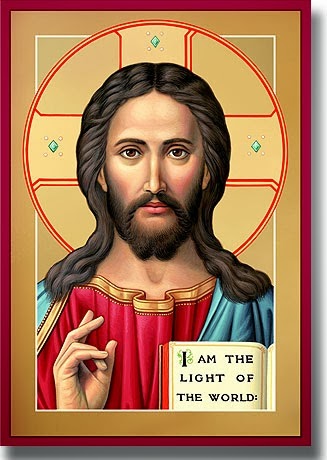
We really don’t know what Jesus looked like when He walked the earth. The Bible itself does not give us specific details about Jesus’ appearance. Of course there were no photographs or selfies, and no one ever painted a portrait of Jesus before He ascended. Images we have are really just artist’s renderings.

But we do know this. When He walked the face of this earth, the Son of God humbled Himself and became a man. He did not fully use His divine powers and prerogatives. He lived just like any other human being. And His appearance was probably nothing special, just like any other Middle Eastern young man from Galilee. As Isaiah said, “He had no form or majesty that we should look at Him, and no beauty that we should desire Him” (53:2).

Today, though, we get a glimpse of Jesus in glory. Today we celebrate the Transfiguration of Our Lord—when Jesus took Peter, James, and John up on a high mountain. There His appearance was changed; He was transfigured, had a metamorphosis, before them. Matthew says, “His face shone like the sun, and His clothes became white as light” (17:2). Mark says, “His clothes became radiant, intensely white, as no one on earth could bleach them” (9:3). And Luke says, “The appearance of His face was altered, and His clothing became dazzling white” (9:29).

For those moments on that mountain, Jesus radiated in all of His divine splendor and glory. On the Mount of Transfiguration, Jesus gave us a sample of the glory we share with Him both now and into eternity. In the Transfiguration of Our Lord, we have a glimpse of the glory that our Lord graciously shares with us. Four things come out of our text.

First, we see and learn that there’s only one way to share in the glory of heaven. We do not share in the glory of heaven because we are good persons. We know we’re not! St. Paul writes in Romans: “None is righteous, no, not one; no one understands; no one seeks for God. All have turned aside; together they have become worthless; no one does good, not even one…. [T]here is no distinction: for all have sinned and fall short of the glory of God” (Rom. 3:10-12, 22). No, we don’t and won’t share in heaven’s glory because we’ve earned it, been obedient, or done the right things through life. We cannot earn it, our obedience ever falters, and we certainly do not deserve it.

When we listen to our Gospel reading, we hear the one way—the only way—we will share in the glory of heaven: “Jesus TOOK with him Peter and James, and John.”  Jesus also tells us, “I am the way.” He is the way to heaven. Jesus is your way to heaven. Just as Jesus took Peter, James, and John to share some moments of glory on the mountain, He will take you to share an eternity of never-ending glory with Him. Jesus promises, “Let not your hearts be troubled. Believe in God; believe also in Me. In my Father’s house are many rooms…. I will come again and will take you to myself, that where I am you may be also” (John 14:1-3). Jesus will take you to be with Him in heaven. Why? Because He loves you, because He forgives you, because He gave Himself for you to atone for your sins, because He revealed His love for you most supremely on the cross.

Here’s the second thing. In the Transfiguration of Jesus we also see the glorified bodies we will have. Jesus was transfigured. For a brief time He was shining with heavenly glory, not as a reflection, not with a giant light shining on Him, but as the very source—He Himself—of that brilliant glory. So it will be for all who trust in Jesus. All who trust Him and all who rest in Him will be raised again on the Last Day. Your physical bodies will be made alive again and transfigured into glorious, heavenly bodies. St. Paul writes in Philippians (3:21): “[He] will transform our lowly body to be like His glorious body.” In 1 Corinthians, he says: “I tell you a mystery. We shall not all sleep, but we shall all be changed, in a moment, in the twinkling of an eye, at the last trumpet. For the trumpet will sound, and the dead will be raised imperishable, and we shall be changed” (15:51-52).

But our Lord does not wait until the Last Day to transfigure us. He also transforms us now through His forgiveness and mercy. When we hear the Gospel of Jesus proclaimed, “we all, with unveiled face, beholding the glory of the Lord, are being transformed into the same image from one degree of glory to another” (2 Cor. 3:18). Even today in the Sacrament of His Body and Blood our Lord works to transform our bodies to be like His glorious body. And this transformation from sinner to saint, from rebel to redeemed, is intended to show forth in the world. As St. Paul writes, “Do not be conformed to this world, but be transformed by the renewal of your mind, that by testing you may discern what is the will of God, what is good and acceptable and perfect” (Rom. 12:2).

Here’s a third thing we take from our Lord’s Transfiguration: all the faithful from all the ages will join us. Just as Moses and Elijah appeared with Jesus and spoke with Him, so also in heaven a great, countless multitude of believers will gather around the throne of God, and you will gather there too. Put yourself in that scene of the great multitude gathered around Jesus on His throne. You will be there with Moses, Elijah, and all the other believers of the Old Testament, with Peter, James, John and all the New Testament saints, as well as all believers in Christ through the ages of the Church.

And it’s a motley bunch really. I mean look what we have before us today: murdering Moses, whining Elijah, impetuous, foot-in-his-mouth Peter, and power-hungry, photo-op-seeking James and John, who wanted their self-chosen brand of glory at Jesus’ right and left hands. But it’s a motley bunch that lives by the glorious grace of God in Christ Jesus. Let’s also look at ourselves in the mirror. We are the worry-wart-Wandas, the hand-wringing-Harries. We are the complaining Cathies, the grousing Guses, the slandering Sams and Sallies. We seek our brand of glory without suffering, especially without suffering the loss of our self-serving. But we’re still the motley bunch that’s saved by Jesus’ suffering, delivered by His death on a cross, and glorified by His glorious resurrection. Moses and Elijah spoke with Jesus about His “exodus,” that is, His journey into the suffering, onto the cross and out from the empty tomb. His exodus is our exodus. He leads us through suffering and death and, especially on the Last Day, He brings us to glory, glory shared with all the faithful from all ages.

Finally, we learn from our Lord’s Transfiguration that heaven with Him will be a wonderful place. Sometimes people joke that heaven might get a bit boring, or that eternity might grow tiresome. But for a few short moments on the Mount of Transfiguration Peter, James, and John got a small sample of heaven, a glimpse of glory. And they did not want it to end! “Lord, it is good that we are here,” Peter exclaimed.

How could it possibly be boring to gather with all the saints around the throne of our Savior God? How could we possibly grow tired of worshiping and receiving from our Savior who loves us enough to suffer and die for us? And besides that, who says it will be stagnant or static? We will have a whole eternity to keep growing as God’s children, to keep enjoying His boundless, infinite gifts of love and life in His new creation. We will proclaim, like Peter, “Lord, it is good that we are here.” We will get to revel and rejoice in the glorious bliss of our heavenly home, replete with unending joy and perfect peace. As Isaiah says, “The ransomed of the LORD shall return and come to Zion with singing; everlasting joy shall be upon their heads; they shall obtain gladness and joy, and sorrow and sighing shall flee away” (35:10).

Jesus’ Transfiguration gives us a glimpse of our glory in Him. As He took the disciples up the mountain, He’ll take us to eternity with Him. As He was transformed, so He also transforms us, both now and on the Last Day. We will get to spend eternity with motley but forgiven sinners like us. Yes, it will be good to be with our Lord Jesus for all eternity. Amen.

30 December 2019

Homily for First Sunday after Christmas (2019)

"Holy Child and Holy Families"
Luke 2:22-40

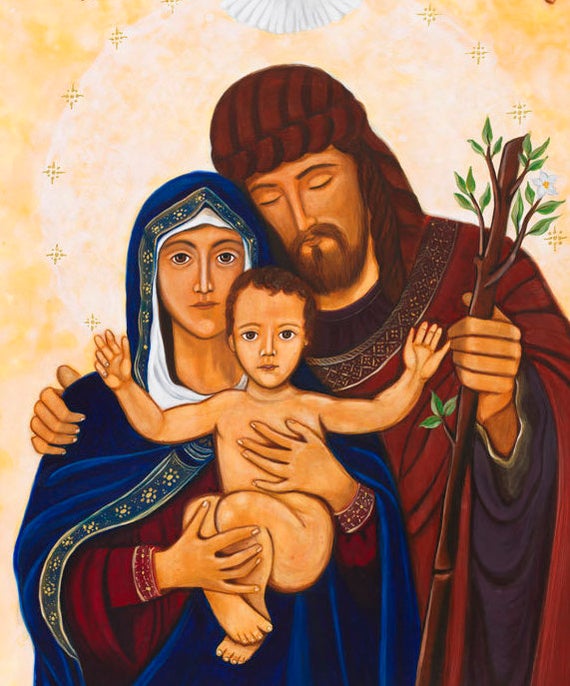
Today we see the Infant Jesus when He is only 40 days old. Long before He can walk or talk, He is brought to His proper home—the Temple of God. Since He opened His mother’s womb, He is holy—set apart—to the Lord. And Joseph and Mary faithfully keep the Old Testament law of offering a humble sacrifice to God. Holy Child and holy family. Blessed by God. Set apart by God for His purpose of bringing salvation to all people—for all children and all families.

If we left Christmas behind on December 25, we would only have some well-loved poetry, a heart-warming picture of mother and Child beside a lowly manger, and some sentimental memories of worship services. But that’s not enough to get you to life with God. By themselves those things don’t get to the real heart of the matter—your heart of sin and God’s heart of forgiveness. On Christmas Eve and Christmas Day we can finally locate God—He’s in the flesh, lying in a manger. But that’s just the beginning of the picture. We need the picture to be filled out; we need the vibrant colors added. This little, holy Child is God’s salvation before your very eyes. This little, holy Child is destined for the fall and rising of many people. This little, holy Child is the very source of holiness for you, no matter what your age or family situation may be.

Today we move from the stable to the Temple of God, the place where God’s glory dwells on earth. And notice how worship life and family life go hand in hand in this account.

Mary and Joseph bring Baby Jesus to God’s house—holy mother, holy father and holy Child. They make a sacrifice according to God’s Word. Simeon is waiting in God’s house for God-in-the-Flesh to reveal Himself. A devout, holy man focused on God’s salvation. The Holy Spirit gave him faith. And that faith kept him in constant vigil in the Lord’s House. That faith prompted him to sing a marvelous song of God’s salvation. And aged Anna, a devout, holy widow, lived her life in constant attendance in God’s house. She lived a life of Temple prayers, she gave thanks to God for sending His Son, and she spoke of the Christ Child to all who looked for redemption. Christ-centered, liturgical worship always gives birth to confessing Christ in daily witnessing.

In our ongoing celebration of Christmas, we see how this holy Child comes not just to be born, but to redeem and make holy. Jesus’ conception in Mary’s womb makes all conceived children sacred. Jesus’ birth makes all births sacred miracles from God. And Jesus’ infancy—complete with nursing, spitting up and dirty diapers—makes infancy pure and holy for us and our children and grandchildren. When the Word becomes flesh, He revels in taking ordinary, fleshly things and making them sacred. And this also applies to families.

We can see from our Lord Himself that God’s design for a family is mom, dad, and children. Family is a holy and precious thing in God’s eyes. It’s not just some traditional invention of society that we can throw in the trash dumpster because we think we have better, more modern, alternative lifestyles. You see, in God’s design the family is the very foundation for society. All the centuries of history prove this. When the family—mom, dad, and children together—is revered, honored and protected, society does well. When the family is scorned or dishonored, used and abused, society crumbles.

In our society the family is under assault. And we Christians seem to be tripping and falling under the pressure rather than standing up to the assault. Instead of holding on to the life-long, one-flesh union and commitment of one man and one woman in marriage, we give in to the world’s disposable marriages, successive marriages, even same-sex marriages. Instead of parents treasuring their children and taking the responsibility to raise and teach their children, parents go off pursuing their own interests and viewing their children as inconveniences or nuisances. Instead of children respecting their parents as gifts from God, pop culture and progressive education teach our children either to ignore parents or despise them.

This is exactly what Jesus comes to purify and make holy: the family broken by sinful self-seeking. He comes to purify and restore us in our family relationships. How does He do this? By being God’s very life and salvation in the flesh. By living in a family Himself. By keeping the very law of God in our place. By being spoken against by people who did not want Him. And, ultimately, by being rejected, nailed to a cross, and killed in our place. That’s the destiny of this holy Child. But that dark destiny of death for Him means pure, life-giving forgiveness for you in your family.

Is any family perfect? No, not this side of heaven. Even Christian marriages have their flaws. Perhaps you suffer from a past indiscretion as a spouse or as a parent. Perhaps you look at yourself in the mirror of God’s law and see only sin and failure—as a child, as a spouse, or as a parent. Let today’s story of the holy Child in His holy Temple be your comfort. This holy Child came to die for you. As Simeon said, “My eyes have seen Your salvation.” Look to the Christ Child for God’s rescue from your sin and failure. Look to the Christ Child who lived a perfect family life for you.

So, whether you wrestle with infidelity or divorce, whether you suffer pain from abuse or guilt over abortion, or whether you endure the daily bickering and hassles of family life, Christ Jesus the holy Child is for you. His falling in death and His rising in resurrection is yours. Now you may die in your sins by confessing them and you may rise again in Jesus’ forgiveness. And your Baptism ushers you into a lifetime of such dying and rising. “What does such baptizing with water indicate? It indicates that that Old Adam in us should by daily contrition and repentance be drowned and die with all sins and evil desires, and that a new man should daily emerge and arise to live before God in righteousness and purity forever.” All of that just for you; all of that just for your family; all of that courtesy of the Holy Child.

And by the way, no matter what your family situation is, this whole story of Christ in His Temple is for you. It’s for the married, the single, and the divorced. It’s for the young and the old, the tot, the teenager, the thirty-somethings, the middle-agers, and the senior citizens. No need to divide ourselves up by group or class or age. Holy Jesus wants to keep us together. Notice what everyone in our story today is focusing on: the Holy Christ Child. Mary and Joseph go to the Temple because of Him. Simeon is waiting for Him, and when he sees the Holy Child, his life is complete. And Anna sees the Child, thanks God for Him, and confesses Him. Here’s the medicine and the hope for today’s troubled family, for today’s weary senior citizens, and for today’s singles: the holy Christ Child, God in the flesh, salvation in God’s house.

So, when you need help and strength in family matters, here it is: Holy Jesus in His holy house. After all, the Church is our true family and this holy place is our true home. Here we learn Jesus’ forgiveness so that we can forgive in our families. Here we are made holy, so that we can live as holy people in our homes, set apart for God’s own special use. Here we not only see the Christ Child with eyes of faith, as did Simeon, but we also get to taste Him in His Body and Blood. And pay close attention to what you get to sing right after Communion. It becomes your song for all of life: “Lord, now You let Your servant go in peace; Your word has been fulfilled. My own eyes have seen the salvation which You have prepared in the sight of every people.” (LSB, p. 165) Amen.

16 December 2019

Homily for Advent 3 - 2019

"Shall We Look for Another?"
Matthew 11:2-11

“Shall we look for another?” This is John’s question in today’s Gospel. Many have the same question today. You may have this question at times.

John the Baptizer sat in prison. Was he plagued with doubt? Was he sending his own disciples to follow Jesus instead of him? Perhaps Gregory the Great put his finger on it. Perhaps John was asking something like this: “Since you thought it worthy of yourself to be born for humanity, say whether you will also think it worthy of yourself to die for humanity.” What if John had been wrong? What if Jesus was not the Coming One after all?

If such questions can come from the lips of John the Baptizer, it’s not surprising they can also come from us. Are you the Coming One? Shall we look for another? Is Jesus really the Son of God? Does He really forgive my sins? What will happen when I die? Where will I go?

Can you find answers for such questions? Can you be certain? Certain that Jesus is God’s eternal Son? How can you be certain?

Jesus gives the answer: through hearing and seeing. Notice that Jesus did not answer the question directly. “Go and tell John what you hear and see.” He pointed to His words and deeds. Why didn’t He answer simply and directly? Sometimes the direct, simple answer does not suffice. It may not help a person hear and see that Jesus is God’s Son. It may not lead to or strengthen faith. When a difficult time comes, faith is shaken. You may have a mistaken notion of what it means that Jesus is  God’s Son. That’s what many had in Jesus’ day. They expected the Messiah would be a great, powerful king who would give them political freedom and a guaranteed income. That’s what many thought as they sang their “Hosannas” on Palm Sunday. But then they ended up crying, “Crucify Him!” on Good Friday.

People in our day have their own faulty notions of Jesus. They learn them from other people, through conversation or from online sources. They’ve heard that Jesus is God’s Son. They’ve heard that He’s loving and merciful. They’ve heard that God exists. But then comes the car crash, the cancer diagnosis, the layoff, or the conflict with friend or neighbor. So much for what you had hoped for. Then come the doubts, the frustrations. Now you’re like John sitting in his dark prison. Perhaps the bitterness creeps in. Perhaps it all seems like nonsense. Perhaps you tell yourself, “If God were God, this would never happen.”

The problem is that you have not heard and seen Jesus Himself. Living faith is not built on what you have heard from others. It’s built on what Jesus does for you. It’s built on being in His presence and Jesus working on you. That’s what happens here today. Jesus Himself comes to you in His Word. You hear that Word and say, “That’s for me.” You speak that Word back to Him in prayer.  And He truly comes down to you in Holy Communion.

Now you learn what it truly means that He’s the Son of God. You learn that Jesus is not merely some 9-1-1 rescue team you call upon only when you’re in trouble, when life goes crazy. Life always goes crazy. You see, you don’t have a single day when you have perfectly kept His commandments. Not a single day when you love Him with your whole heart. Not a single day when you love your neighbor as yourself. You have not been clean in heart or life.

But in all of this craziness and chaos, Jesus is the Coming One. He comes to intervene, to live in your flesh, to suffer, die and rise again for you, to pay for your sins. When you believe in Him and cling to Him, all is forgiven. So you need Him not just sometimes, but all the time—24-7-365. Now you know who Jesus is, not just from what others tell you, but because you are one of the poor to whom the Gospel is preached. You are the blind one who receives sight. You are the leprous one cleansed of sin. Now you have heard and seen.

How certain is all of this? Even if you hear and see, even when you learn to know and cling to Jesus, a person can still take offense. Jesus also said, “Blessed is the one who is not offended by Me.” Even John, in his prison, was tempted to be offended. If Jesus is the Coming One, why doesn’t He intervene? Why doesn’t He clean up the mess of my life, the mess of this world? Why does He let all this happen? Why doesn’t He use His power to beat down evil? After all, He healed the sick, fed the hungry, and raised the dead. But remember this: when the craziness and chaos of sin came upon Him, He let Himself be bound and led away, only to be nailed to a cross.

People around you may scoff at this Jesus. A neighbor may think that the story of Jesus’ Birth and other stories in the Bible are only fables. A coworker may scoff and smirk: “How can you believe all that?” The temptation is to take offense at the apparent weakness of Jesus. A baby in a lowly manger? No place to call home? A king without a throne? A death as a criminal? What did John do when such questions plagued him? He sent some disciples to Jesus. He turned to Jesus for the answers.

But not everyone is that wise. Jesus speaks of a reed shaken by the wind. It’s a picture of those who find their answers based on the opinions and fads of the moment. We can see this in the attempts make Jesus the spokesman for whatever cause of the day. The holy family in cages as refugees? Jesus portrayed in film for the same-sex cause? Jesus also talks about being dressed in soft clothing. This is the picture of those who seem to be secure, sophisticated, and have it all together. But on the inside, they are empty and afraid to go against what’s trendy. How can they take Jesus seriously when He might ask them to go against the wisdom of the time?

So Jesus can be a stumbling block. After all, He does call us to be, think, and live different from the culture and world around us. Is He the Coming One, or should we look for another?

How was John certain? How were the disciples certain? They were certain through the hearing and seeing. Through the words and deeds of Jesus. You also have these words and deeds of Jesus. They’re among us here today. All you need to do is hear and see.

It’s what we proclaim and live as this new church year begins. Christ has come, still comes, and will come again. Long ago He wandered through the world in the flesh. He still dwells in the flesh and He still wanders through the world. Though now He wanders by means of His Word and Sacraments. He is present in the Gospel, forgiving sinners and giving hope as you listen. He is present in the washing, making clean and giving new birth as you live in that bath. He is present in His Meal, sustaining faith and giving salvation as you eat and drink His Body and Blood.

You are the poor to whom the Gospel is proclaimed. You are the leper who has been healed. You are the blind one who now sees. And now you have the privilege and honor of conversing and interacting with those who ask their questions. How can they be sure of Jesus? How can they know He truly is the Son of God and their Savior? You cannot argue them into salvation. They may still have their questions or doubts. But you can bring them to Jesus. Here they get to hear and see what you do. And what’s that? Not a mere prophet. Not a simple teacher. But the Son of God who loves them by suffering and dying for them. After all, that’s what He’s done for you. That’s why He brings you into His Church. You can be certain. Jesus Himself makes you certain that He is God’s Son and your Savior. Amen.

31 December 2018

Homily for the First Sunday after Christmas (2018)

"Holding Life"
Luke 2:22-40

The world has put away the trees and decorations, but the Church still gets to celebrate Christmas. The world has entered the time of returning and exchanging gifts, but the Church still gets to ponder and treasure the gift of all gifts—God’s beloved Son become flesh. The world packs up and moves on to the next thing in its death-avoiding, stuff-centered life, but the Church still gets to meditate on and receive Life Himself as He comes to us in His Body and Blood.

Please, do not grow weary of the Church’s extended Christmas celebration! Let’s not strip the Christmas things away too soon! The world may see December 25th as the end of its rush-rush, get-more season, but the Church sees the 25th as just the beginning—the beginning of celebrating Life itself, Life-in-the-flesh for us.

But there’s a tension. That line between Church and world does not divide as neatly as we would like. It’s not us versus them. You and I live with feet firmly planted in both places. We are in the world, but not of it. Your birthday makes you a citizen of the world. Holy Baptism makes you a citizen of God’s Church and Kingdom. So that dividing line between Church and world cuts right through each of us, right through our very hearts.

Because of your birthday, you live from birth to death. That specter of death governs much of how you live your life—why you succumb to fear, why you are so harried and stressed, why you are so insistent on not missing out or even asserting your rights. No one wants to think about it, but the end of your birth lurks just around the corner; and it can snatch you at any moment. So you live your whole life trying to ignore death’s control over you and, at the same time, trying to run from it. You and I live as if this life and this world are all that matter.

But because of Baptism, you have a different calling. Your Baptism calls you to live as if God actually matters. It allows you to live from birth to life. Sure, each of us must still undergo that death we fear. But the waters of Baptism promise you that this death has already been dealt with. You have been drowned in the waters of Baptism, and so death no longer has a hold on you. Now Life Himself holds you and even lives within you. Now you need not fear death or anything else.

You see, when our Lord who is Life is given to you—washed over you, spoken into your ears, placed into your mouth—when you have this Life who destroyed death, when you have this Life who promises to be with you and see you safely through this world and into the next, then why be afraid of anyone or anything? Why let anyone or anything else control you? Why live your life in any way that goes against Life Himself? Why let anyone or anything else keep you from receiving this Life regularly?

Why? Because the fear of death and the world’s enticements are often strong and successful. They routinely succeed at pushing Life Himself out of your mind, out of your heart, and out of your daily living. No, Lord of Life Jesus does not loosen His hold on you. And, no, death and the world cannot loosen or pry His hold from you. Rather, you and I hold on more firmly to the world’s “life-to-death” vision, and we end up losing sight of the Lord’s “death-to-life” truth. But the Lord’s “death-to-life” way is what’s real. It’s what we have received.

Our Lord’s “death-to-life” truth—that’s what distinguishes the church from the world. Our Lord’s “death-to-life” truth gives you the courage to live against the world, against your sinful inclinations, and against your fear of death. In this “death-to-life” reality, our Lord plants Himself in you, so that you no longer live for yourself. Now He lives in you and with you and through you.

What does this look like? Look at old Simeon. Simeon lives for only one purpose—to embrace and hold on to Life. But Simeon does not embrace the world’s life, that “life-to-death” vision. Nor does he embrace his own concept of life or someone else’s. Instead, Simeon embraces Life Himself—Life in the flesh.

Now even as Simeon cradles Life in his arms and looks Life in the eye, he does see death—along with persecution, temptation, heartache, turmoil, evil, suffering, and cross. But Simeon will not be scared by these things. He will not let the world and the world’s devil take away the Life he holds. And Simeon will not let the horror he sees tear his heart away from the Life he holds and relies on. Instead, aged Simeon holds Life up and speaks a blessing.

“Behold, this Child—this Life in the flesh—is born to give life by being put to death. This Child is destined for the fall and rising of many in Israel. He will clearly draw the line between Church and world, between life and death. He will make it plain that you cannot live the world’s life and still live after death. And He will call everyone from death to life, but few will hear, few will care to follow. Therefore, this Child will be a sign that will be opposed and spoken against. That opposition will be a sword piercing through your own soul because you embrace Him as I do. But don’t be afraid! Even as the thoughts of many hearts will be revealed, this Child is the Sun of Righteousness who brings healing in His wings.”

So do you see how old Simeon embraces Life? He blesses what others may curse. He blesses the suffering, the cross, and the death of the Christ Child. Simeon knows why our Lord Jesus “came down from heaven and was incarnate by the Holy Spirit of the virgin Mary.” It was not simply so that our God and Lord may have a taste of what it’s like to be human. It was not so that we may feel better about God, about our relationship with Him, or even about life in general. This Child whom Simeon holds and embraces is Life Himself. He is born to sustain and deliver those who are tempted, those who suffer, those who will die. He is born not to live a life we could never live, but to give us a life we could never have. He is born not to make our suffering go away, but to usher us safely through this valley of sorrow to Himself in heaven.

Christmas really does mean so much more than “Happy Birthday, Jesus.” Christmas means that Life Himself has come into our flesh to bear our sin and be our Savior. Amen.


27 December 2018

Homily for the Nativity of Our Lord-Christmas Day (2018)

"Our Divine Dwelling Place"
John 1:1-18

Christmas and home just go together. Bing Crosby made the words famous in 1943, and Michael Bublé still croons them: “I’ll be home for Christmas / You can count on me.” Other well known pop singers title their holiday album “Home for Christmas” or sing songs such as “Christmas Is Coming Home.”

Home is a treasured thing, to be sure. We pray that our homes may be “a shelter for the defenseless, a fortress for the tempted, a resting place for the weary, and a foretaste of our eternal home” with God Himself (LSB Agenda, 70). Home is not just a physical space; it gives us roots, identity, security, a sense of belonging, and a place of emotional wellbeing. At home we can laugh without being shy, and our tears can dry at their own pace. Our feet may leave our homes, but not our hearts. As someone once quipped, “Home is a place you grow up wanting to leave, and grow old wanting to get back to.”

Treasuring home and longing for home, though, are much more than sentimentality. They go to the very core of our being as God’s created people. We are created to be at home with the living God. He is our truest and best home. But we come from a long line of people looking to leave home, strike out on their own, and even run away from home. Sure, Adam and Eve were given their eviction notice from the Garden of Eden and compelled to leave, but truthfully they had already run away from their true home—from God Himself—by eating that piece of fruit. Thus “The world was made through Him, yet the world did not know Him.” Even when “He came to his own,…his own people did not receive Him.”

So the real reason for this season, and this day especially, is us homeless waifs. We wander through life searching for meaning and purpose on our own. We look for some place…any place…and some way…any way…to belong, to be accepted, to feel at home in this fallen world. But since we have left our true home, who is God Himself, our searching is vain and our wandering is aimless. We pile all of our worldly goods of self-sufficiency and self-determination into our rusty, beat up shopping carts with squeaky wheels as we wander through this fallen world. The homelessness of our human fallenness actually leads us to view our cardboard shanty town dwellings as though they were fabulous mansions. But we know they’re not. And we cannot escape the isolating illness of our sin, nor can we avoid the biting cold of death.

So the Word of God, the Second Person of the Trinity, left His eternal home to bring us in out of the cold. “In the beginning was the Word, and the Word was with God.” He was in a face-to-face relationship with God the Father from eternity. ”And the Word was God.” The Word Himself was and is the same divine essence as the Father. “And the Word became flesh and dwelt among us.” He took on our very skin and bones, our body and soul, eyes, ears, and all our members. “Dwelt among us” can also be translated “tented among us” or “tabernacled among us.” But this was no temporary “tenting” or “dwelling.” The Son of God did not become flesh only to disrobe Himself of our humanity when He was done with it. Nor did He cease dwelling among us when He ascended to the Father’s right hand.

“The Word became flesh and dwelt among us” in order to bring us in out of the cold of our sinful rebellion. He became flesh to bring us home to God for all eternity—home where we receive His healing for our disease of sin; home where we may bask in His life-giving warmth, shielded and delivered from the coldness of death.

Moses proclaimed this homecoming long before Christmas: “The eternal God is your dwelling place, and underneath are the everlasting arms” (Dt. 33:27). He also teaches us to pray, “Lord, you have been our dwelling place in all generations” (Ps. 90:1). We even get to see what God’s dwelling place—our true home—looked like in Moses’ day. It included bases and frames, poles and pillars, and skins and cloth placed over them. In its central room was the beautiful golden ark with the mercy seat on top. Here’s where “the glory of the LORD filled the tabernacle.” Here’s where and how the LORD would be with His people throughout their journey in the wilderness and into the Promised Land. Though they were wandering, they were still at home, because God was their divine dwelling place.

Even when God’s people became homeless in Babylonian exile, God still wanted to bring them home to Him. Ezekiel proclaimed God’s promise of homecoming: “My dwelling place shall be with them, and I will be their God, and they shall be my people. Then the nations will know that I am the Lord who sanctifies Israel, when my sanctuary is in their midst forevermore” (Ezek. 37:27-28). That promise came somewhat true when the people returned to their own land. But it became completely fulfilled when the Word became flesh.

You see, when the Word became flesh to dwell among us—to bring us home—He came to bring us the fullness of His grace and truth. “And from His fullness we have all received, grace upon grace.” Gifts abounding more than under any Christmas tree and more enduring than any we can unwrap last night or today. Forgiveness for our many doubts and misplaced priorities. Life to combat the coldness of death. And salvation as the best gift of all from the Word become flesh who came to die on a cross. To all who believe in His name, He gives the right to become children of God—children in God’s home, both now and for eternity.

Oh, we do not have that right by our own birth, but we do have it in the rebirth Jesus gives by water and the Spirit. We do not have that right by our own bloodline, but we do have it through the blood of Jesus, both on the cross and at the altar. We do not have the right to be in God’s home as His children by the will of our flesh or any other human plan or design. No, we only have this right because “of God.” The Word of God. The Word who became flesh and remains flesh. The Word who dwelt and still dwells with us. “In him you also are being built together into a dwelling place for God by the Spirit” (Eph. 2:22).

On this Christmas 2018, we find ourselves a bit homeless in our own building—gathering in a basement auditorium doubling as a sacred sanctuary. Despite appearances, though, we are still at home in our divine dwelling place—not the brick and mortar, but in our flesh and blood Savior. And even as we eagerly await returning to the sanctuary, we are even more eager in anticipating our eternal home. It’s the home the Apostle John heard promised for all of us: “And I heard a loud voice from the throne saying, ‘Behold, the dwelling place of God is with man. He will dwell with them, and they will be his people, and God himself will be with them as their God’” (Rev. 21:3).

Today as we celebrate our Savior’s Incarnation, and as we enjoy our various family traditions, we rejoice in our divine dwelling place. We are home for Christmas. We can count on Jesus. Amen.


Homily for the Nativity of Our Lord-Christmas Eve (2018)

"Pondering the Mystery"
Luke 2:1-7

The Angel of the Lord appeared to Moses in a bush that burned with fiery flame, but was not consumed (Ex. 3). That Angel of the Lord was the Son of God, before He took on human flesh. In that burning bush we get a preview of our Lord’s Incarnation. The Lord was about to rescue Israel from slavery in Egypt. When He takes on our humanity, He comes to rescue us from slavery to sin and death. The bush was not consumed by the fire; our Lord’s human nature is not consumed by His divine nature. The Lord God is “a consuming fire” and He “dwells in unapproachable light,” but His human nature is not harmed by His divine nature. “In Him the whole fullness of the deity dwells bodily.” This Child is true God and true man.

Tonight we celebrate the mystery of God the Son taking on our human nature. Let’s imitate Moses as he approached the burning bush to see why it was not consumed. Let’s ponder this mystery and miracle of Christ being both God and Man. As Moses took off his shoes on that holy ground, let’s take off the shoes of our sin-stained thoughts and come near with the bare feet of humility and faith given by God. Let’s ponder the time of Jesus’ Birth, then the place, then His mother, and finally the manner of His Birth.

Let’s ponder THE TIME. “In those days a decree went out from Caesar Augustus that all the world should be registered.” Caesar Augustus was perhaps the most powerful emperor of Rome. He united the Romans and reigned at a time of peace and prosperity. So Augustus decreed a registration—a census—for taxing his united empire. It’s into this world the Son of Almighty God comes—the universal King, who alone holds all power and peace. But He comes to bring His eternal kingdom. He comes during a time of Roman peace to bring the  peace that surpasses all understanding. He is the “Prince of Peace.” He’s born into this world of sin and death to set the human race at peace with God once again. He wants to give the true, inner peace of faith in Him and His salvation. “For where there is faith, there is Christ; where there is Christ, there is God’s grace; where there is grace, there is peace and joy of the heart” (Gerhard, Postilla I:48). “Since we have been justified by faith, we have peace with God through our Lord Jesus Christ” (Rom. 5:1).

We also note that our Lord was born at a time of census and taxation. But He does not come to tax us. No, He comes to keep the taxing Law of God Himself. “God sent forth His Son, born of woman, born under the law, to redeem those who were born under the law, so that we might receive adoption as sons” (Gal. 4:4-5). He comes to free us from the curse—the taxation—of God’s Law. In fact, our New-born King registers our names in His Book of Life. “Rejoice that your names are written in heaven” (Lk. 10:20). More than that, because our Lord has taken on our human nature, you can rejoice when He tells you, “I have engraved you on the palms of my hands” (Is. 49:16). “Yes, He loved His people, all His holy ones [are] in his hand” (Dt. 33:3).

Infant King Jesus does not burden us with taxation, as do Caesar or Uncle Sam. Instead, He rescues us from the debt and taxation of sin and death. “To us a Child is born, to us a Son is given; and the government shall be upon His shoulder” (Is. 9:6). Earthly governments may govern on the shoulders of their subjects or citizens, but King Jesus carries the load of His eternal kingdom on His own shoulders; He willingly takes the burden of sin and death upon Himself.

Let’s ponder THE PLACE of our Lord’s Birth. “Joseph went up from Galilee, from the town of Nazareth, to Judea, to the city of David, which is called Bethlehem, because he was of the house and lineage of David.” Joseph and Mary resided in the backwater town of Nazareth. But that’s not where the Christ was to be born. Micah had prophesied: “You, O Bethlehem…, who are too little to be among the clans of Judah, from you shall come forth for Me one who is to be ruler in Israel, whose origin is from of old, from ancient days” (Mic. 5:2). God knew how to fulfill His promise through Caesar’s decree. That’s how God works for us too. We all suffer worldly troubles, personal mishaps, interpersonal strife, individual illnesses and limitations. And yet God works through these things to achieve His purpose. What purpose? To turn our hearts away from other helpers so that we may cling solely to Jesus for help and comfort. Not only is Christ born in Bethlehem, but He is also born in us. And He gives peace. He said, “In the world you will have tribulation. But take heart; I have overcome the world” (Jn. 16:33). It all starts in Bethlehem.

And speaking of Bethlehem, there’s great comfort and joy in that name. It means “house of bread.” This Babe born in “House of Bread” is the true food for our hungry souls. He says, “I am the Bread of Life…. If anyone eats of this bread, he will live forever.  And the bread that I will give for the life of the world is my flesh.” (Jn. 6:48, 51). We get to leave the insignificant, little villages of our self-serving hearts and minds, and we get to receive the Food of the Christ, the food that fills and satisfies our souls—our lives—with His grace, with His mercy, with His life.

Let’s ponder our Lord’s VIRGIN MOTHER. Why be born of a young virgin girl? Isaiah had foretold it: “Behold, the virgin shall conceive and bear a Son, and shall call His name Immanuel” (Is. 7:14). Mary fulfills that promise. But how can a child be born of a virgin? God has a unique way of bringing something out of nothing. In the Old Testament Aaron’s staff “sprouted and put forth buds and produced blossoms, and it bore ripe almonds” (Num. 17:8). On one day Gideon’s fleece (a lamb skin, not a sweatshirt) was filled with dew water, but the ground was completely dry. Then the next day the ground was covered with dew, but Gideon’s fleece was dry as a bone (Judg. 6:36-40). In the same way, God works supernaturally through Mary. By the Holy Spirit, Mary, a natural virgin, produces the supernatural fruit of the Christ Child. Through the Holy Spirit’s work, Mary was filled with the heavenly dew of Christ the Savior. As Isaiah foretold: “Shower, O heavens, from above, and let the clouds rain down righteousness” (Is. 45:8). When Jesus is born, the dew of His righteousness, salvation, and forgiveness is spread over all the earth. And Mary remained pure virgin after the birth just as before the birth.

Why was the Christ Child born of a Virgin? So that He might be born without sin. You see, if He were born in the normal, natural way, the infection of sin would have been passed on to Him too. But Jesus wanted to take on pure, holy, untainted flesh, in order to heal our sinful, tainted human nature.

And the mystery of Jesus’ Virgin Mother applies to us in another way. Just as Mary was at the same time a virgin and a mother, the Christian Church is also both virgin and mother. As a virgin, the Church lives in complete fidelity to her coming Bridegroom, Jesus. And the consummation of that relationship will come at the eternal wedding feast. And as a mother, the Church daily conceives and bears and nurtures us, the children of God, children “born, not of blood nor of the will of the flesh nor of the will of man, but of God” (Jn. 1:13).

Finally, let’s ponder THE MANNER of our Lord’s Birth. “And she gave birth to her firstborn son and wrapped him in swaddling cloths and laid him in a manger, because there was no place for them in the [guest room].” In the home where Joseph and Mary most likely stayed that night, the guest room was already taken. So after Mary gave birth, she placed her Child in a manger at the back of the main family living room. This Little Child came into the world to rescue us and all sinners. We humans have been driven out of Paradise because of our own sin and rebellion. So, this Little Child comes to bring us back to our heavenly home. He comes to where we are in order to find us and lead us home. Psalm 49 says, “Man in his pomp yet without understanding is like the beasts that perish” (49:12). How fitting, then, that the King of the Universe should be born and placed in a feeding trough. It’s where He would find us in order to lead us back home to His heavenly Paradise.

So, He humbles Himself to exalt us. By His poverty we become rich. He becomes weak to make us strong once again. He takes our debt of sin and pays it in full, and He frees us to enjoy the wealth of His eternal mercy. As Johann Gerhard proclaimed on this day some 400 years ago: “If a rich brother can bequeath the inheritance of the father’s treasures to his brothers and sisters, how much more will not this our wealthy Brother, who is Lord of heaven and earth, be able to give us the kingdom of His treasures which He has won for us through His birth in poverty, through His holy life and through His bitter death! By grace He wants to do this. Amen.” (Postilla, I:54)


10 December 2018

Homily for Advent 2 - Populus Zion (2018)

Coming Redemption
Luke 21:25-36

Our Coming King has three advents—first, His past coming in the flesh, into time and space; second, His ongoing coming in grace by means of word, water, and bread and wine; and third, His future coming in glory for judgment on the Last Day. In all three advents—past, ongoing, and future—our Lord makes His redemption draw near. Our task, then, is to straighten up and raise our heads. Our task is to stay awake and watch. So says our Lord in today’s Gospel.

“There will be signs in sun and moon and stars, and on the earth distress of nations in perplexity because of the roaring of the sea and the waves.” Catastrophic changes showing the world coming unglued. God’s good and orderly creation will become unstable and revert to chaos. It’s what happens when God withdraws His loving, creating hand. It’s also what happens when God steps into His creation to bring His redemption.

“People fainting with fear and with foreboding of what is coming on the world.” Jesus’ future coming will be alarming and cataclysmic for every person, all peoples, every nation, all round the globe. Those who do not hear His Word will have nothing but fainting, fear, and foreboding. But those who do “hear the Word of God and keep it” (Lk. 11:28) will receive the ungluing of creation and the alarming cataclysm with comfort and hope. You see, the coming universal cataclysm points to the coming of our Savior, the Son of God, bringing His redemption near. “Then they will see the Son of Man coming in a cloud with power and great glory.”

So when you see these things taking place, stand up, raise your head, and rejoice. Your redemption, your rescue, is coming!

Now this Day of Judgment stuff can get quite confusing and misleading because of false teachings that run rampant. One of those false teachings is “Millennialism.” Millennialism teaches a literal one thousand-year visible reign of Jesus on earth before His final judgment. Like the Jews of Jesus’ day, some believe such a visible reign of the Messiah would bring a whole millennium of earthly peace and prosperity, with believers serving as Jesus’ cabinet members, so to speak.

This false view comes from a literalistic reading of Revelation 20—where those who did not worship the beast “came to life and reigned with Christ for a thousand years” (Rev. 20:4). What Millennialism misses is that the Bible often uses numbers symbolically. Taken with all of Scripture, the thousand years refers to the fully complete time of Jesus’ reign over His Church from His ascension until the Last Day.

A second false teaching about the end of time and Jesus’ return is “the Rapture.” Rapture teaching says that Jesus’ followers will be “caught up…in the air” and removed from the earth. And this will be a secret snatching by Jesus. Think the Left Behind books and movies popular several years ago. One person—the believer—will be taken, and the other person—the unbeliever—will be left, this teaching claims. And Rapture teachers even debate and dispute among themselves. Will this secret taking be “pre-“ or “post-“? Pre-millennium—before the thousand years—or Post-millennium—after the thousand years? Just when will Jesus secretly snatch His followers so they can avoid enduring the time of tribulation?

The problem with Rapture teaching is that it turns the simple, comforting hope of Jesus’ return into complicated stages of uncertainties. It also denies that Christians do indeed suffer before the Last Day, and it claims, against the Bible, that those who reject Jesus will have a second chance to believe in Him and receive salvation during His earthly reign.

And a third false teaching about the end of time is “Reincarnation.” Simply put, Reincarnation believes that when people die, they are reborn in other earth-bound bodies or a series of other bodies. Think chiefly of Hinduism or Buddhism. As a kissing cousin belief, we might also think of that often-heard saying at funerals, that when a loved one dies, he or she “becomes an angel.”

Whether it’s Reincarnation or human beings transmuting into angelic beings, such teachings deny our Lord’s promise of the resurrection of the body at His return. Jesus did say, “An hour is coming when all who are in the tombs will hear his voice and come out, those who have done good to the resurrection of life, and those who have done evil to the resurrection of judgment” (Jn. 5:28-29). Hebrews also says, “It is appointed for man to die once, and after that comes judgment” (Heb. 9:27).

So when you see these things taking place…and when you hear such false teachings running rampant…stand up, raise your head, and rejoice. Your redemption, your rescue, is coming!

What will happen on that great and glorious Day when our Lord Jesus returns? Scripture keeps it clear and simple and comforting.
  • Jesus will visibly appear in glory with His angels (Matt. 25:31), and everyone will see Him. No secrets.
  • The many vying, conflicting kingdoms of this world will give way to the one eternal reign of Jesus, and “the kings of the earth will bring their glory into it” (Rev. 21:24).
  • The dead will be raised bodily. The bodies of all believers—both those still alive and those raised from the grave—will be glorified (1 Cor. 15:51-52).
  • King Jesus will judge all people as a shepherd separates the sheep from the goats (Matt. 25:31-46).
  • Satan will be vanquished and banished forever (Rev. 20:10).
  • The current fallen creation will be cleansed and purified by fire, and we will get to see, hear, touch, taste, and smell the “new heavens and a new earth in which righteousness dwells” (2 Pet. 3:7-13).
  • We will be reunited with all who have died in the faith (Rev. 7:9)—our Christian loved ones, friends, mentors, and so on.
  • We will rejoice and exult at the great marriage feast of the Lamb and His Bride made ready, clothed with fine linen, bright and pure (Rev. 19:6-9).
  • And, finally, we will see God face to face, and He will dwell with us forever (Rev. 21:3; 22:4), just as He intended in the beginning.

So, whether you see the whole universe coming unglued as Jesus says, or whether your own personal universe comes unglued in smaller ways, “straighten up and raise your heads, because your redemption is drawing near.” “Christ has died. Christ is risen. Christ will come again.” Raise your heads because your redemption began drawing near when the sun hid its light and the earth quaked on Good Friday as Jesus hung lifeless on a tree for you. Raise your heads because your redemption drew nearer when the Sun of righteousness—the Word made flesh—rose bodily on the third day with healing in His wings for you. Raise your heads because your true and only King has ascended to the right hand of the Father where all things are under His feet, where He rules over all authority and power and dominion, and where even now He blesses you with “every spiritual blessing in the heavenly places” (Eph. 1:3).

Your coming redemption is also already here. It draws near in the washing of regeneration and renewal. It draws near in Jesus’ words that will not pass away. It draws near when you feed on Jesus’ flesh and drink His blood. “Whoever feeds on [His] flesh and drinks [His] blood has eternal life, and [Jesus] will raise him up on the last day” (Jn. 6:54).

“May the God of hope fill you with all joy and peace in believing, so that by the power of the Holy Spirit you may abound in hope” (Rom. 15:13). Amen.

21 January 2018

Homily for Transfiguration - 2018

"Transfigured"
Matthew 17:1-9

Listen here.

Make no mistake about it. When you see Jesus transfigured on the mountaintop, you see your own glorious future. You also will be transformed and transfigured. But also, don’t doubt this: it will be a rough, dark road to get you there.

This glorious sight of Jesus outshining the sun itself is no random event, no mere magic show. Jesus is not just showing off His divine glory. No, this event is intimately connected to what happened six days earlier. Jesus had asked His disciples who they confessed Him to be. Peter spoke up for all of them: “You are the Christ, the Son of the living God” (Matt. 16:16). “Well done, Peter!” Jesus said. “You’re confessing the faith that My Father has given you. Believe me, I will build My church on that very confession.” Then Jesus spoke of going to Jerusalem, suffering many things, being killed, and then being raised on the third day. We accept the words well enough, but Peter strongly objected: “Never Lord! How can you even think that?” So Jesus countered and corrected Peter: “Get behind me, Satan! … You are not setting your mind on the things of God, but on the things of man” (Matt. 16:23).

We, like Peter, love the picture and promise of radiant glory. We’re not so sure about the harsh reality of gloomy suffering—not for Jesus, and certainly not for ourselves.

So when Jesus is transfigured—revealing Himself as the very source of all light and glory—He seeks to comfort and sustain His distressed disciples. Suffering? Death? Cold, dark grave? The mere thoughts of such things, let alone going through them, lay us flat like a boxer giving a gut punch followed by an undercut. Jesus knows His disciples are laid flat by His prediction of the Passion. He wants to encourage them and sustain them. It’s as if Jesus is telling them, “Yes, it will be dark and deadly. Yes, you too will be shaken to the core, as well as opposed, hunted down, imprisoned, even executed just for confessing Me. But let not your hearts be troubled. Here is what lies on the other side of suffering and death, both Mine and yours.”

You see, this was not the first time that Jesus was transfigured and transformed. He has been the radiant, brilliant source of all light and glory since before the beginning of time—along with the Father and the Holy Spirit. Then, when the time was right, the Son of God actually transformed Himself by taking on our human flesh and blood. In taking our humanity into Himself, He transfigured Himself—He hid Himself—in humility.

So when Jesus predicts His passion and death, He’s simply unveiling what lies further back in the deep dark recesses of His glory—His suffering in the garden, His arrest, His trial, His bearing the cross to Golgotha, the pounding of spikes into His hands and feet, the lifting of the cross into its place, and the weight of His body hanging from wrists nailed into the cross beam. This is the Son of God completely revealing Himself. This is His real glory—suffering so to redeem and forgive us sinners who had fallen from our glory. It’s on the mount called Calvary that you are transfigured.

Peter, James, and John basked in and soaked up the brilliant glory of Jesus transfigured. Peter even wanted to extend his mountaintop experience with a bunch of tents. Moses and Elijah, though, were there for a different purpose. Yes, they are heroes of the faith—Moses the icon of the Law and Elijah the representative of the prophets. Yes, Moses’ skin shone with a most incredible suntan after his time on the mountain with God. Yes, Elijah was taken to heaven in a fiery chariot, and hence did not taste death. But Moses and Elijah were also there as fellow sufferers with Jesus. Consider the many times God’s people rejected Moses with their complaining over things as mundane as food and water. Remember the times that Elijah had to flee for his life from the government out to get him or the time he took on the many prophets of Baal. The same people rejected Jesus. On top of that, Moses and Elijah appeared to speak with Jesus about His “exodus”—His soon-to-come suffering, His pending Passion (Lk. 9:31).

With all of this darkness and gloom hanging over the disciples, they desperately needed some encouragement, some hope, some promise. That’s why Jesus shone brighter than the sun—just a small glimpse of what lies ahead. That’s why the Father’s voice boomed from the cloud: “This is My beloved Son, with whom I am well pleased; listen to Him.” That voice still bids us to listen to Him, and Him alone. And we find that voice speaking ever so clearly in the Scriptures. After all, here’s “the prophetic word, to which you will do well to pay attention as to a lamp shining in a dark place, until the day dawns and the morning star rises in your hearts.”

Here’s what awaits all who follow Jesus—first, the suffering and dying of a fallen world; then, the glory and radiance of new life with Jesus. It’s the way it works since we humans first transfigured ourselves from God’s holy people into the devil’s sinful slaves. We should have had the brilliance of a trusting, loving relationship with God all along. Instead, we chose the nakedness of self-centered shame. Instead of being clothed with God’s glory, we had to settle for being covered by garments of animal skins.

But Jesus has come to reverse all that. He’s the new Moses as He leads us out of our slavery to sin and death and into the Promised Land of His mercy, forgiveness, and eternal life. He’s the new Elijah—surpassing all the prophets—because He alone has the words of eternal life. He is transfigured on one mountain, but on a different mountain—the one called Calvary—He accomplishes your transfiguration. He transforms you from sinners to saints, from people suffocating in death to people breathing the very air of life.

Make no mistake about it. The transfiguring and transforming continues. He who was transfigured from humility back into glory now comes transforming Himself in the bread and wine of His holy Supper. And with that Meal, He begins and continues transforming our lowly bodies to be like His glorious body. “And we all, with unveiled face, beholding the glory of the Lord, are being transformed into the same image from one degree of glory to another. For this comes from the Lord who is the Spirit” (2 Cor. 3:18).

So we live patiently and trustingly, awaiting that day when our own transformation will burst forth with brilliance. Much like putting up with the inconveniences of renovating an organ or soon a sanctuary, we bear with those things that are not yet set right—the crosses we bear, the sorrows we endure, the losses we suffer. But as we live patiently and trustingly, we draw strength and resolve from our transfigured Lord of glory. He sustains us. He gives the promise, the hope, the courage.

And so we can be people of life in this world of death. By God’s grace in Jesus, we can resist being conformed to this world. Instead, we are transformed by Jesus renewing our minds, by discerning what His good and acceptable and perfect will is. We can rejoice with those who march for life year after year. We can work with those who help mommies and daddies to keep their babies as well as teach them how to be better parents. We can run into the muck and the mess of our culture of death—this culture bent on snuffing out lives in the womb and shortening the lives of those who suffer or become frail with age. You see, our Lord of glory gave those people their very lives. He wants to protect their lives. He wants to transform them to eternal life too.

Our transfigured Lord reveals Himself to be the Lord of life in the face of death. This glorious revelation sustains us and gives us hope and courage as we journey through the valley of the shadow of death. Through Jesus’ transfiguration, “The Spirit himself bears witness with our spirit that we are children of God, and if children, then heirs—heirs of God and fellow heirs with Christ, provided we suffer with him in order that we may also be glorified with him” (Rom. 8:16-17). Amen.

14 January 2018

Homily for Epiphany 2 - 2018

"New Wine"
John 2:1-11

Listen here.

Put yourself in the shoes of the master of the feast. You’re putting on the wedding banquet of the year for everyone in Cana of Galilee. The groom, the bride, and all the guests have been counting on you to provide the best food, the best drink, the best celebration—a celebration to give lasting memories for years. Then you notice a major faux pas. It would make you—along with the bride and groom—the laughingstock of the century. Running out of wine? At the wedding of the year? Who could ever live that down?

Then, in the midst of the stress and the shame, your employees bring you a cup. More wine? New wine? Where did this come from? Then you take a sip. NEW WINE! Better wine than what you first served. Better than anything you’ve ever tasted! Where did THAT come from?!

What IS this new wine? Did Adam and Eve have such good wine in the Garden of Eden? If they did, the wine at Cana might just be on par with it, if not better yet. We do know this is NOT the kind of wine that made Noah drunk (Gen. 9:21). It’s not the kind of wine that led Lot’s daughters to make him drunk so they could have children by him (Gen. 19:32). None of that debauchery with Jesus’ new wine.

We might get a hint of this new wine in the sacrifices of the tabernacle and the temple. Take a lamb, add some fine flour, and a bit of beaten oil for the main course, and then some wine for the drink offering (Ex. 29:40). God included wine on the menu for many of the sacrifices in His place of worship. In fact, He even prescribed only the best flour, the best oil, and the best wine—the first fruits (Deut. 18:12).

Then, when God’s people returned from exile and got reacquainted with God’s good Word and teaching, God used Ezra and Nehemiah to remind them of His joy for them. He wanted to turn their 70 years of repentance into lasting and ongoing joy. “Don’t weep and mourn anymore,” God said, “but rather eat the fat, drink the sweet wine, and share with those who aren’t ready.” After all, that day was “holy to our Lord.” And here’s the heart of the message: “Do not be grieved, for the joy of the LORD is your strength” (Neh. 8:10).

The psalmist speaks of wine that gladdens the heart of man (Ps. 104:15), but this new wine that Jesus brings goes beyond that First Article gift. This is the wine that made David sing, “Oh, taste and see that the LORD is good!Blessed is the man who takes refuge in him!” (Ps. 34:8). The wine of God rescuing him; the wine of safety, security, and joy in the joy of the Lord Himself. Truly a gift of the Second and Third Articles.

This new wine of Jesus is the wine spoken of by the prophet Amos—the mountains dripping sweet wine, the hills flowing with it (Amos 9:13). This wine comes from the Divine Vintner who raises up the fallen tent of David, who repairs and rebuilds His people, who makes them His Church that will stand for all eternity. It’s the wine that Isaiah also proclaimed—the Lord making a feast on His mountain, a feast of rich, fatty food and well-aged, well-refined wine (Is. 25:6-8). You see, on that same mountain God Himself would feast on something completely different: He would swallow up death forever.

The new wine that appeared suddenly and miraculously at Cana of Galilee is the wine of new life and resurrection for you and for me.

Ah, but it’s not yet Jesus’ “hour” when He confronts those empty jars and that embarrassing void of wedding wine. Yet Jesus still gives a prelude, a preview, a teaser trailer of what He actually came to do. Those empty wine cups? Those empty water jars? He would fill them. And in filling them, He would fill the people who drank from them. He would fill them not only with savory fruit of the vine, but also and especially with His saving life.

Jesus is no mere bartender rushing in to rescue a wedding party on the brink of collapse. He has a bigger and better purpose. He comes to rescue the whole human race—people like you and me; people including you and me—from their emptiness of God’s goodness. When His “hour” does come—on the cross—He will drink the bitter cup of God’s wrath and judgment. He will be the laughingstock of all around Him, even spurned by His closest friends. He will suffer the shame and humiliation of a cross. He will swallow up death forever. But in drinking that bitter cup, He will ensure that we can taste and see that the Lord is good. He will make death itself void and bare. He will give us the sweet joy of the Lord. That’s the sweet wine delivered at Cana. It’s also the sweet wine delivered here at this altar today.

Your Lord Jesus comes to fill your emptiness. We live in a world that has so much stuff, such overloaded schedules, such a plethora of things and people and activities for filling our lives. And still we are empty on the inside. Some try to fill the emptiness with the old wine, or old booze, of this fallen world. Some try to fill the emptiness with the fruits of the sexual revolution—free sex with whomever you wish, without all the so-called constraints of one man-one woman marriage for life. Some try to fill the emptiness with the meaning of “likes” or “follows” or viral videos on social media. For those who fill themselves with the booze, the numbness eventually wears off and the emptiness remains. For those who fill themselves with the sexual conquests du jour, they still sense the emptiness of commitment and real love. For those who get their meaning from clicks and likes, well, we know how quickly things change in Internet land.

What’s your emptiness? What is it that makes you think and feel that if you could have that one thing, you would finally be complete and whole? Whatever worldly, created thing you think could fill that emptiness, just know that it can’t; it won’t.

Jesus gives the new wine at Cana’s wedding to show you that He fills your emptiness with Himself. Just as He filled the stone water jars with the best wine, and just as He restored the joy of the bride, the groom, and the master of the feast, so also He restores you and your joy by filling you with Himself—with His forgiveness, with His life, with His salvation. You are cleansed by the purifying water of His Baptism. You are filled with the new wine of His Supper.

So your God has joy in you, and He restores that joy in you by revealing His Son—the Bridegroom of the feast. We don’t need to get drunk with wine, for that is debauchery. Instead, let’s be filled with the Spirit. Let’s address one another in psalms and hymns and spiritual songs. Let’s sing and make melody to the Lord with our hearts (Eph. 5:18-19).

We don’t need to fill ourselves with the ways of the world when it comes to sex and marriage. Instead, let’s remember and extol the profound mystery of Christ and His Church—the profound mystery of the one-flesh union of love, life, and commitment. That profound mystery reveals itself in joyful little glimpses when wives submit to their husbands as to the Lord and when husbands love their wives as Christ loved the Church and gave Himself for her.

What IS this new wine? It’s Jesus revealing Himself to you and for you. It’s Jesus bringing you into the joy of His Father and the Holy Spirit. It’s Jesus filling your emptiness with Himself—His life, His resurrection, and His joyous purpose in life. “Let us rejoice and exult and give him the glory, for the marriage of the Lamb has come, and his Bride has made herself ready” (Rev. 19:7). Amen.

26 December 2016

Homily for the Nativity of Our Lord-Christmas Day

"The LOGOS Became Flesh"
John 1:1-18

Listen here.

John begins his gospel with a most unique take on the Christmas story. John uses a very high-octane, supercharged term. “In the beginning was the LOGOS, and the LOGOS was with God, and the LOGOS was God.” LOGOS. It’s where we get words such as “logic” and “logical.” It also gets added to all those words that end in L-O-G-Y—“biology,” “psychology,” and “theology.”

What is this LOGOS that was in the beginning and that is God? The term can suggest something like “reason”—hence “logic” and “logical.” It can also suggest “a means of communication,” or an “expression of what is on one’s mind.” Greek philosophy used LOGOS to describe what gives order to the universe—something like “natural law”—and even what constitutes the rational soul in humans.

Such is this supercharged term John uses in his Christmas story. But John is not shaped by Greek philosophy. Instead John is shaped by his Hebrew roots. For John, the LOGOS is the “Word of God” from the Old Testament. Through those books and those centuries, the Word of God is God in action—God in action creating the world, God in action revealing Himself, God in action delivering His people.

At creation, God spoke. He uttered what was on His mind and it happened. “By the word of the LORD the heavens were made, and by the breath of his mouth all their host” (Ps. 33:6). At Mt. Sinai, God spoke. He communicated His will and revealed Himself to Moses in order to deliver His enslaved people. “I AM who I AM…. The LORD, the God of your fathers…. I will send you to Pharaoh that you may bring my people, the children of Israel, out of Egypt.” (Ex. 3:14, 16, 10). And here’s a delightful image. The apocryphal book of Wisdom speaks of all things lying peaceful and silent at midnight, and then, all of a sudden, the almighty LOGOS leaps from the royal, heavenly throne to conquer and slay the enemies of God and His people (18:14-15).

Such is this supercharged term John uses in his Christmas story. God in action. God inserting Himself, even leaping, into human history to rescue and redeem and deliver. This LOGOS “was with God.” This Word of God is distinguished from God, yet He also exists in a very, very close personal relation with God the Father. But John does not leave it there. This LOGOS “was God.” He shares the same nature and being with God the Father. Perhaps we can say He is an extension of the personality of God. Perhaps we can say, “What God was and is, the LOGOS was and is.” Certainly we can and do say: “God of God, Light of Light, very God of very God, begotten, not made, being of one substance with the Father” (Nicene Creed).

Now, if all of that makes your heads hurt or spin on this Christmas morn, good! That’s exactly John’s point. Christmas is about much more than a mommy, a foster daddy, a baby lying on some hay, and some animals standing around, chewing their cud. It is that, but it’s, oh, so much more. Now John uses another high-octane, supercharged term in his Christmas story. It’s a term that’s sure to raise eyebrows, challenge sensibilities, and send elitist Greek philosophers, and their modern heirs, running to their “safe spaces.” “And the LOGOS became FLESH and dwelt among us.” The term for “flesh” is sarx. It’s not the skin that you and I can see on the outside; it’s the layer of muscle—the meat—that lies beneath the skin and covers the bones. Thus, we get those terms beginning with “sarco-,” such as “sarcoplasm” or “sarcoma” or “sarcophagus.”

Such is this other supercharged term John uses in his Christmas story. John’s unique take on the Christmas story gives us a perfect marriage and melding of the exalted and the base, of the heavenly and the mundane, of God and Man—that is, the Son of God who takes on our full humanity, with all of its “flesh-and-bone-ness,” with all of its heart-pumping, lung-breathing, organ-secreting realness, and, yes, even with all of its bed-head and morning-breath qualities.

“The LOGOS was God…and the LOGOS became [meat].” Just like us, in every way…except the sin that infects us. That He did not take on! You see, sin is not part and parcel of human nature, but it does infect all of us and each of us.  It is our congenital birth defect received from Adam and Eve. Sin is the reason the LOGOS assumed and took on our full-fledged, meaty, down-to-earth humanity. God took on our meat and flesh to have it pierced and torn with thorns and spikes. God leaped down from His royal throne to leap up onto a cross. “Who for us men and for our salvation came down from heaven and was incarnate by the Holy Spirit of the Virgin Mary and was made man” (Nicene Creed).

When John marries these two supercharged terms together in his Christmas story, they also become fighting words. John is actually poking a finger of truth into the eye of false teaching, performing some doctrinal surgery with a chainsaw. Through the ages, some have objected to the LOGOS—the divine Son of God—taking on flesh and bone and blood in this material world, this “meat-space.” They view this material world as inherently evil. For them salvation is getting away from—escaping, really—the prison cell of flesh, bone and blood, of rocks, trees, and rivers. What counts is what you feel. What counts is your supernatural knowledge of non-material matters. (Trust your feelings, Luke! Use the force, Luke!) Think of Greek philosopher Plato and his famous image. He said life in this material world is merely looking at shadows on the cave wall; the reality is something different and out of sight. And this view of life—that material, fleshly, meaty things are bad, and only the unseen, spiritual forces are good—leads some to view Jesus as only appearing to be human, only seeming to be flesh and blood.

So, along comes John in his supercharged Christmas story. He marries and melds the LOGOS with the sarx, the divine with the human. The eternal Son of God becomes a Man with real flesh, bones, blood, muscles, lungs, and kidneys--all to suffer, bleed, and die on a real tree. And we need John’s supercharged Christmas story in our day too. You see, we live in a time when the same false teachings confront us. A baby in mommy’s womb is not considered a full-fledged human being. Snuffing out the baby’s life is not considered killing, but rather some sick, social virtue. Whether a person is male or female, some claim, is not a matter of biological fact, but rather a matter of how one feels or dresses. What’s true for you may not be true for me. The worship that matters for many is the worship of the god within, the inner light, the special feeling. And we, dear Christian friends, are not immune to these false thoughts and views and feelings. After all, we live and move and have our being in the same communities; we converse with people who believe these ways; and we steep in these cultural juices. We even have these thoughts and views and feelings within ourselves.

This is why we need John’s Christmas story, supercharged with LOGOS and sarx intimately married and melded together. “The Word became flesh and dwelt among us, and we have seen His glory, glory as of the only Son from the Father, full of grace and truth.”

“Of the Father’s love begotten
Ere the worlds began to be” (LSB 384:1). 

The truth is that God—Father, Son, and Holy Spirit—loves you too much to let you wallow in the mess of this fallen material world, a mess that you and I continually add to with our own sins of mistrust and lack of love. God loves you too much to let you dream of escaping this material world by some “spiritual” quest based on your feelings of the moment or the age.

“Oh, that birth forever bless-ed,
When the virgin, full of grace,
By the Holy Ghost conceiving,
Bore the Savior of our race,
And the babe, the world’s Redeemer,
First revealed His sacred face” (LSB 384:2).

You see, when the LOGOS takes on flesh, He takes on your “meat”—your flesh, your blood, your humanity—to restore you to real life, body and soul, with God Himself.  God is placed in a manger. God ends up on a cross for you and in your place. No need to spurn the flesh or the material world. No need to seek the abstract god within. God comes to you and to me. Just as He once came and dwelt in the tabernacle built by Moses, He also comes to dwell in flesh and bone and blood for you in Jesus Christ, “true God, begotten of the Father from eternity, and also true Man, born of the Virgin Mary.” And He still comes to dwell with us, in His Body and His Blood on the Altar. “Christ alone our souls will feed; He is our meat and drink indeed; Faith lives upon no other!” (LSB 458:7).

Since Jesus took on your flesh and mine, since Jesus assumed your sin and mine, since Jesus bled and died for you and for me, you and I can receive and rejoice in the flesh and blood life in this material world that He Himself gives. You and I can rejoice that He has given us our bodies and souls, our eyes, ears, and all our members, our reason and all our senses, and that He Himself makes us males and females.

John’s Christmas story actually adds eternal meat and weight to the other accounts of Jesus’ Birth. It’s much more than a cute story; it’s much more than a picture on a Christmas card. Jesus’ Birth is your new birth. The LOGOS taking on flesh is God’s very own means of communicating and expressing what is on His mind for you. “When the fullness of time had come, God sent forth his Son, born of woman, born under the law, to redeem those who were under the law, so that we might receive adoption as sons” (Galatians 4:4-5). “When the goodness and loving kindness of God our Savior appeared, He saved us…by the washing of regeneration and renewal of the Holy Spirit, whom he poured out on us richly through Jesus Christ our Savior, so that being justified by his grace we might become heirs according to the hope of eternal life” (Titus 3:4-7). Amen.

25 March 2016

Homily for Good Friday

"Sacrifice in the Flesh"
John 18:1-19:42 & Luke 1:26-38

Listen here.

This single service called the “Holy Three Days”--Holy Thursday, Good Friday, and Easter—is the most sacred time of our Christian year. This year Good Friday also falls on March 25, the day the Church also sets aside for the Annunciation of our Lord—the time when the angel Gabriel came to the Virgin Mary and announced that she would become pregnant with and give birth to the Son of God.

What a marvelous intersection of Jesus’ Birth and Death, of His taking on flesh and His offering the ultimate sacrifice! The very flesh and blood Savior conceived and born of Mary would reveal Himself as God’s great sacrifice in the flesh for you. The Son of God stooped down to take on our human flesh and blood for the express purpose of sacrificing Himself on the cross for you. Without His flesh and blood, He could not have suffered and died for you. And when He suffers and dies in His flesh given by Mary, He restores you, in your flesh, to life with God.

In the ancient world, people thought that a person died on the same day that he was first conceived. Instead of celebrating birthdays, as we do, they would mark the day that a person died and then say, “That’s the day, all those years ago, when Uncle Barnabas was conceived in his mother’s womb.” So the early church marked the day of Jesus’ death as the same day, 33 years earlier, when He was conceived by the Holy Spirit in the Virgin Mary. So, today we get to mark the day when He first took on flesh and blood along with the day on which He sacrificed Himself in the flesh.

On Annunciation Day we fix our eyes on the Virgin who conceived and bore a Son, and we call Him “Immanuel.” On Good Friday we fix our eyes on the suffering, suffocating, dying Son of God who is with us in our place on the bloody cross. Annunciation draws us to the fullness of time when God sent forth His Son, born of a woman. Good Friday shows us how He redeems us who are born under the law and how God adopts us as His heirs of His heavenly gifts.

God showed His favor to Mary as He prepared for His Son to be born. He shows you His favor through His Son crucified, dead, and buried. Mary was to name Him “Jesus” because, as He shows on the Cross, He saves you, His people, from your sins. Mary was promised that her Son would reign over the house of Jacob forever. You see that promise fulfilled as Jesus hangs lifeless on His cross-shaped throne, crowned with thorns, with the charge “King of the Jews” hanging above His head.

His tiny infant hands grew to bless and heal, to cleanse the temple and comfort the downtrodden. But then they received the piercing nails pinning Him to the cross in your place. His adorable baby feet grew to walk the dusty roads as He proclaimed God’s kingdom, to walk miraculously on the water as He rescued Peter from drowning, and, finally, to stomp on the serpent’s head by being nailed to a tree. His vibrant infant eyes once looked to His Virgin Mother in dependence and adoration, but from the cross He could only see the mocking gestures, the angry faces, and His God who had forsaken Him instead of you. At first, His mouth could only coo and gurgle, but then it would speak the great wisdom of the Triune God and His loving mercy, especially as it uttered those immortal and life-giving words: “Father, forgive them, for they know not what they do” (Lk. 23:34).

The security of swaddling cloths had to give way to the shameful nakedness of the cross, because our sin made us naked in shame before God. But wrapped in Christ’s blood, you have security in His forgiveness. The friendly wood of the manger had to give way to the hard, rough wood of the cross. It might seem like “folly to those who are perishing, but to us who are being saved it is the power of God” (1 Cor. 1:18). The sweet milk from Mary’s breast had to give way to the bitter, vinegar-filled cup of God’s wrath. It was the only way that you and I could taste and see that the Lord is good.

Mother Mary made sure to clothe Him as He grew up, but the soldiers made sure to strip Him bare as they lifted Him from the earth. But never fear: in your Baptism you are clothed with the robe of Christ’s perfect life. When Jesus was an infant small, His Virgin Mother held Him and tended His every need. But as He hung from the Cross, He tended to her need as He gave her to the Apostle John and gave John to her as a new son. Not only does this crucified Son of the Highest reconcile you to God, but He also reconciles you to each other and teaches you to sacrifice yourselves for one another.

When Mary took Jesus to the temple to be circumcised, she was told, “A sword will pierce through your own soul also” (Lk. 2:35). But the piercing that saves you and heals you came when the soldier pierced Jesus’ side “and at once there came out blood and water” (Jn. 19:34). Yes, He, not His Mother, was “wounded for [your] transgressions” and “crushed for [your] iniquities…and with His stripes [you] are healed” (Is. 53:5). And long after Jesus last rested in the warm, tender embrace of His Mother, He finally rested in the cold, hard tomb of Joseph of Arimathea. Jesus’ rest in the tomb shows you that you now have rest with God.

When we celebrate the Annunciation, we hear Mary respond to the angel, “Let it be to me according to your word” (Lk. 1:38). When we celebrate Good Friday, we ponder the cruel blows, the mock trials, the contrived death sentence, the scourging that shreds His flesh. We hear the echoes of the nails being pounded into His wrists and feet. We hear the words spoken from the cross. We visualize the blood flowing mingled down, and we recall Him giving up His own breath of life. As we ponder these sacred events, let us also speak Mary’s words: “Let it be to me according to your word.”

And what does that Word say about a crucified and dead Son of God? It says: “if anyone is in Christ, he is a new creation. The old has passed away; behold, the new has come” (2 Cor. 5:17). It says, “For our sake [God] made Him to be sin who knew no sin, so that in Him we might become the righteousness of God” (2 Cor. 5:21). May God grant you the same faith that the Virgin Mary confessed. Like her, may you ponder and adore the Son of the Highest, especially for His sacrifice in the flesh for you.

St. Ephraem (306-373) teaches us how to pray, ponder, and adore on this Good Friday:
You love humankind, O Christ, and I glorify You for that. You are the only Son, the Lord of all things. You alone are without sin. You gave Yourself up to death for me, an unworthy sinner, the death of the cross. Through this suffering, You have delivered all human beings from the snares of evil. What shall I render to you, Lord, for such goodness?

Glory to You, friend of all!
Glory to You, O merciful Lord!
Glory to You, longsuffering God!
Glory to You, who takes away all sins!
Glory to You, who came to save us!
Glory to You, who became flesh in the womb of the virgin!
Glory to You, bound in cords!
Glory to You, whipped and scourged!
Glory to You, mocked and derided!
Glory to You, nailed to the cross!
Glory to You, buried and risen!
Glory to You, proclaimed to all humankind, who believe in You!
Glory to You, ascended to heaven! Amen.

23 February 2015

Homily for Quinquagesima

"Seeing with Faith"
Luke 18:31-43

Two Sundays ago we heard about living by grace—the “sola gratia” or “grace alone” on the banner. Last week we heard about God planting the Seed of His Word made flesh—referring to the “sola Scriptura” on the banner. Today is our final Sunday of preparation before we begin the journey called “Lent.” Today we focus on the “sola fide”—by “faith alone”—on the banner. As we journey through Lent, it takes faith—not plain ol’ physical eyesight—to see what our Lord does and achieves for us. And that seeing with faith ushers us into a whole new life as well. St. Paul said it this way: “I have been crucified with Christ. It is no longer I who live, but Christ who lives in me. And the life I now live in the flesh I live by faith in the Son of God, who loved me and gave himself for me” (Gal. 2:20).

In today’s second reading we hear what the life of faith is all about. God placed us into that new life when He poured the water over us in the font. And that life is all about love. With St. Paul we learn to say, “If I … have not love, I gain nothing. Love is patient and kind; love does not envy or boast; it is not arrogant or rude. It does not insist on its own way; it is not irritable or resentful; it does not rejoice at wrongdoing, but rejoices with the truth. Love bears all things, believes all things, hopes all things, endures all things. Love never ends.” THAT is the life to which God calls us to return. After all, He who calls us to this life is Love-in-the-Flesh.

In today’s Gospel reading our eyes are opened to see this One who is Love and who loves us. We see that our Lord Jesus Christ is both true Man and true God. If we don’t see that, then we’ll never get Lent right; we’ll never rejoice in His Passion. But when we do see our Lord as both true Man and true God, as Love in the Flesh—and hold on to Him, never letting go of Him—then we can hold on and endure the wild, wooly ride that’s about to take place.

In today’s Gospel our Lord shows us both of His natures. First, He shows us His humanity when He predicts His Passion: “See, we are going up to Jerusalem, and everything that is written about the Son of Man by the prophets will be accomplished. For He will be delivered over to the Gentiles and will be mocked and shamefully treated and spit upon. And after flogging Him, they will kill Him, and on the third day he will rise.” He foretells the horrible, agonizing suffering that awaits Him. But He suffers such things only as a human being can suffer. Only as Man can He suffer these things. Only as Man can He die and be raised to life again. All of these things—His Passion, the extreme trauma to His body, His life bleeding out—they all show His true human nature in the most profound way.

But then look at the second half of the Gospel. And ask yourself this: Who could hear the blind man’s cry for mercy? Who could give sight to this man, except God Himself? Only God can do that! And this is the One whom Isaiah proclaimed: “Behold, your God … will come and save you. Then the eyes of the blind shall be opened, and the ears of the deaf unstopped.” When’s that? When your God comes to you!

We now come to the starting gate of Lent. Our journey begins in three short days. Today carries the name “Quinquagesima”—50 days before Easter. We are about to embark on a journey traditionally marked by fasting, praying, and giving alms. So today the Church calls us to see with the eyes of faith WHO Jesus is and WHAT He goes to Jerusalem to do. He is at the same time true Man and true God. He is true Man so that He might suffer and die in our place. He is true God so that His suffering, death, and resurrection might forgive the sins of the whole world, crush death itself to death, and give us His life of love.

And let’s keep this in mind. Lent is not a 40-day period for us to feel sorry for Jesus. No need to pity Jesus for all that He suffered. After all, it was “for the joy that was set before him” that He “endured the cross, despising the shame, and is seated at the right hand of the throne of God” (Heb. 12:2). Our Lord does not suffer and die to win our pity. No, He does it to give us His love. And His love gives us life. When we follow Him through His Passion, let’s not be like the disciples who “understood none of these things. This saying was hidden from them, and they did not grasp what was said.” They did not get WHAT He would do because they could not quite see WHO was about to suffer, die, and rise again. They did not yet see that this Man before them was also fully and completely God.

When we see the WHO, then we follow our Lord—not merely on the path to Golgotha, but all the way to the joys of Easter morning. When we see the WHO, then we can marvel at the wisdom of God. What wisdom is that? “The word of the Cross,” as St. Paul says. “We preach Christ crucified, a stumbling block to Jews and folly to Gentiles, but to those who are called, both Jews and Greeks, Christ the power of God and the wisdom of God.” St. Paul goes on: “He is the source of your life in Christ Jesus, whom God made our wisdom and our righteousness and sanctification and redemption.” (1 Corinthians 1:18, 23, 30)

When we see that it’s the Lord of Glory who stands there, not answering a word, being beaten and slapped, then we fall down and give praise to God. When we remember that with a single word—or even just a single thought—He could have struck down His abusers but did not, we fall down and give praise to God. When we see that the One nailed to the cross, the One praying for pardon for His persecutors, the One lifted up on the pole of the cross, is the very same God who fixed the world in place, then we fall down and give praise to God. When we see that the One whose blood stains the wood and the earth is the same God who stoops so low to raise up all the fallen children of Adam, then we fall down and give praise to God.

When we realize this is the One who breathes life itself into everyone and everything, and yet He breathes His last and gives up His own life, then we fall down and give praise to God. When we see this One who closes His eyes in death and is laid in the tomb, we fall down and give praise to God. When we see this One who was raised on the third day in a body incorruptible, the One who is the source of everlasting salvation to all who believe in Him, the One who was with the Father from the beginning, the One who is truly and always God, then we fall down and give praise to God.

So, before the great journey of Lent begins, our Lord opens our eyes to see who He truly is. We will travel through several weeks of returning to our Baptism in repentance. Then we will arrive at the holy week of His Passion. We will follow Him up the road to Jerusalem. We will marvel at the love that He reveals to us. After all, this is God’s heart for us. And we will welcome Him as that very gift of love. Everything that He accomplished in His Incarnation, He also accomplishes for us and in us. Yes, we get to bear His body in our bodies. Our lives become living sacrifices. Since we are joined to Him in Baptism, we are united to Him who is Love. That’s what St. Paul described in our second reading. That love—given from the cross and lived out in our lives—is the only true LIFE.

Once again today we gather at our Lord’s Table. He feeds us on the very same Body that was so mistreated, so abused, so dead, but that was also raised in eternal glory and gives everlasting life. He pours into our mouths the very same Blood that ran down the cross, the same Blood that covers all of our sin, the same Blood that answers every accusation the Law has against us. He gives us these gifts so that we may share in His salvation. And that salvation restores us to love. That’s what He created us for: to love—to love Him and to love one another. That’s what Adam and Eve fell from. And that’s why He went to the Cross: to restore us to that life of love. It’s the life He gives each of us in the waters of Baptism. [It’s the life He now gives to little Anders Peter.] It’s the life to which He constantly calls us to return. After all, He is both God and Man. He is Love-in-the-Flesh, in our flesh. And our life is in Him. That’s what we get to see with the eyes of faith.

“And immediately [the blind man] recovered his sight and followed him, glorifying God. And all the people, when they saw it, gave praise to God.” Let’s join the blind man and see Jesus our Lord, true Man and true God. Let’s join all the people and give praise to God as we follow Jesus up the road to Jerusalem and beyond that to our eternal home where Love Incarnate reigns supreme. Amen.